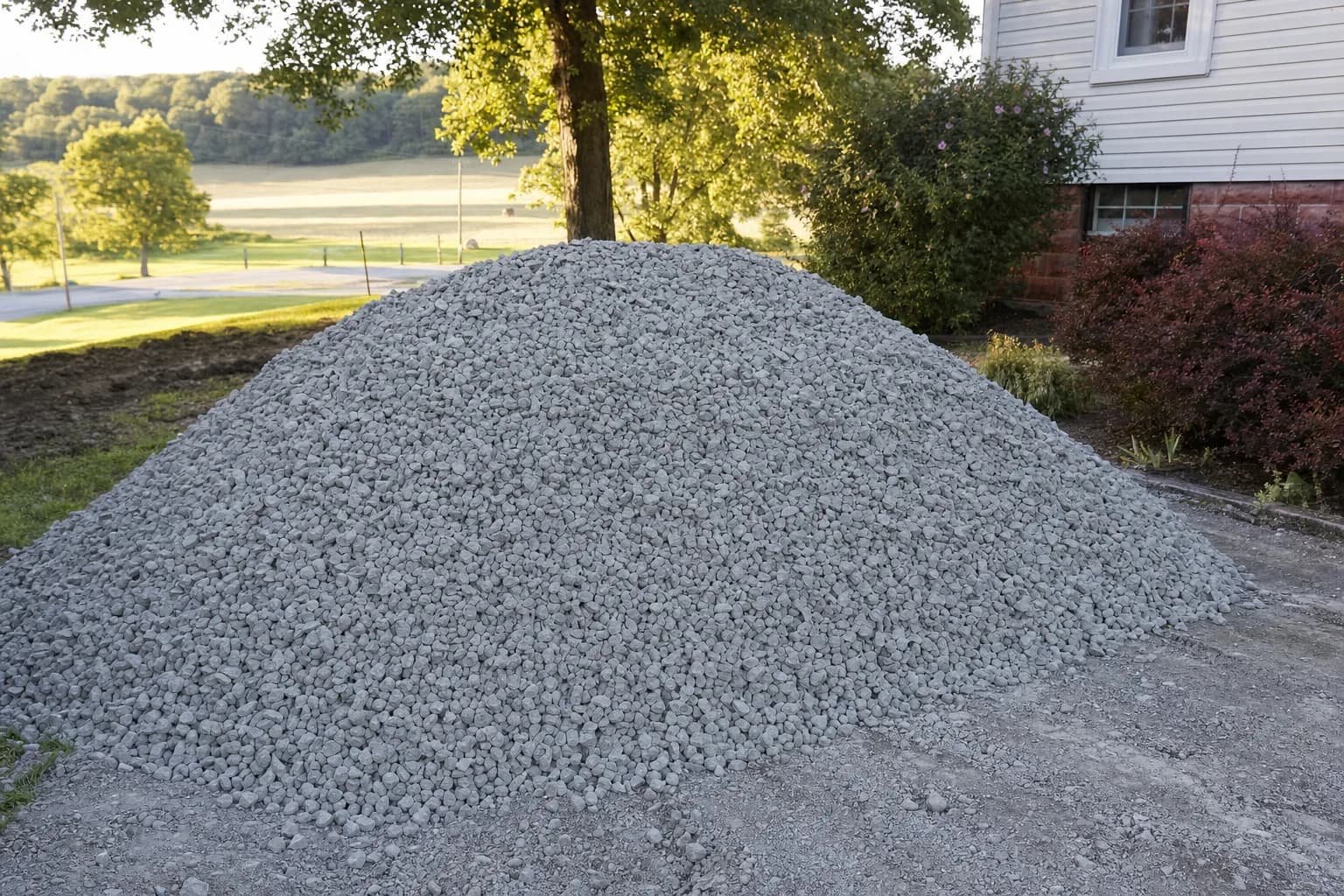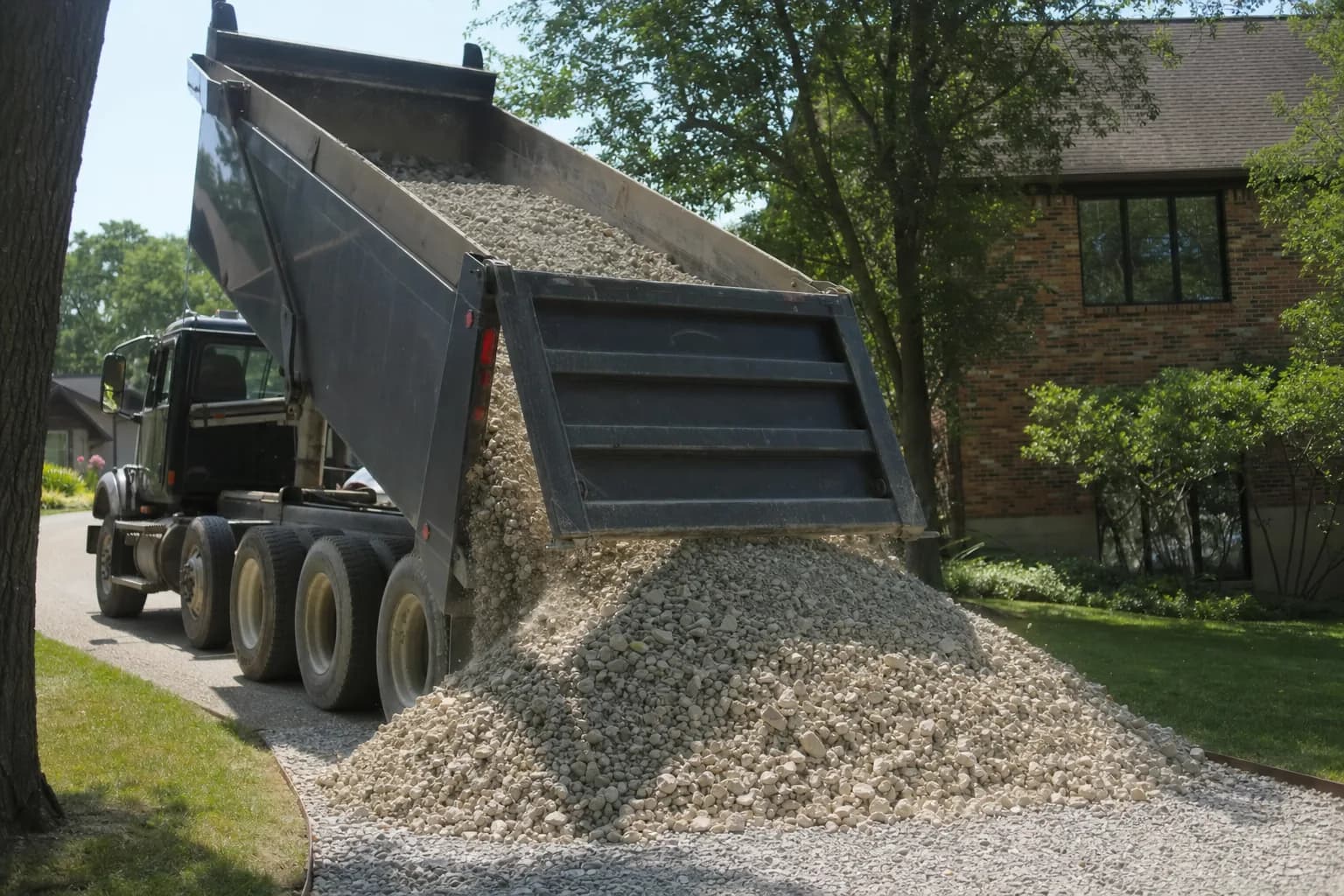
Gravel Delivery for Indiana Farm Lanes, Pads and Beds
Order crushed stone, river rock, topsoil & more, delivered in as fast as 2 business days.
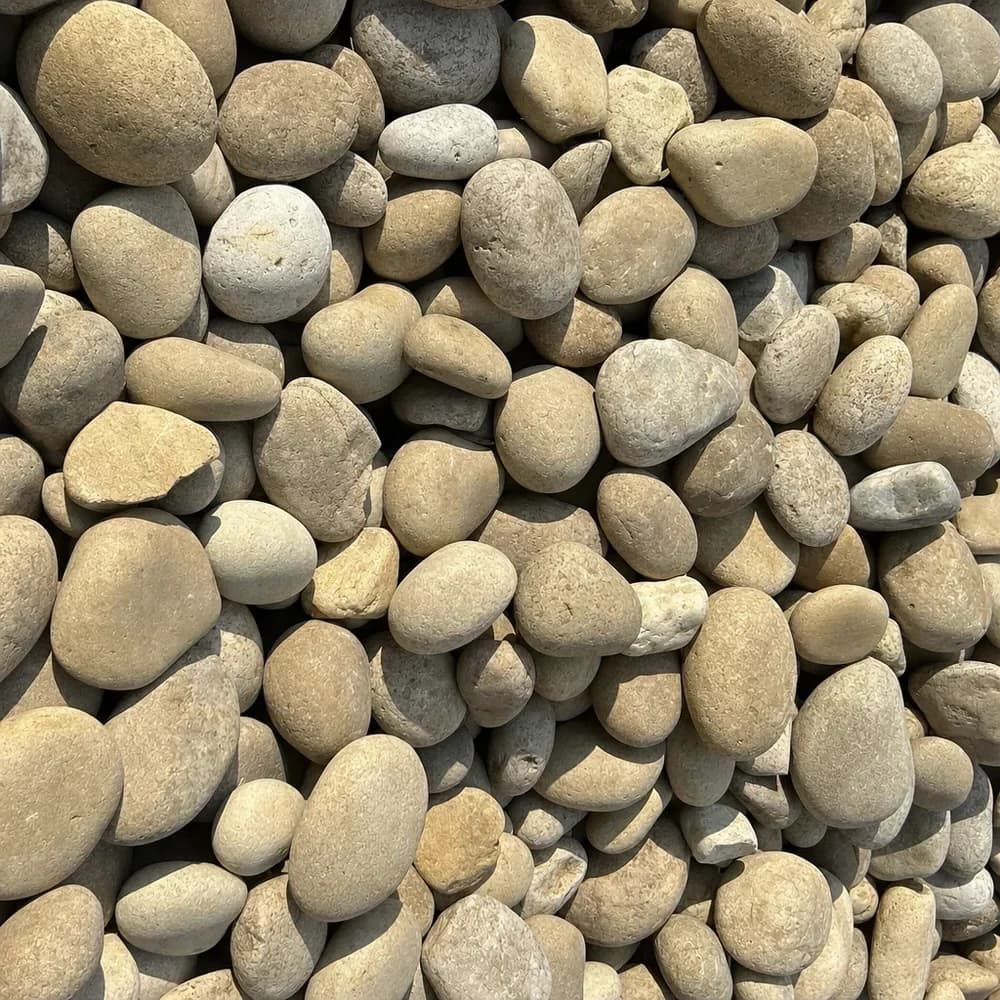
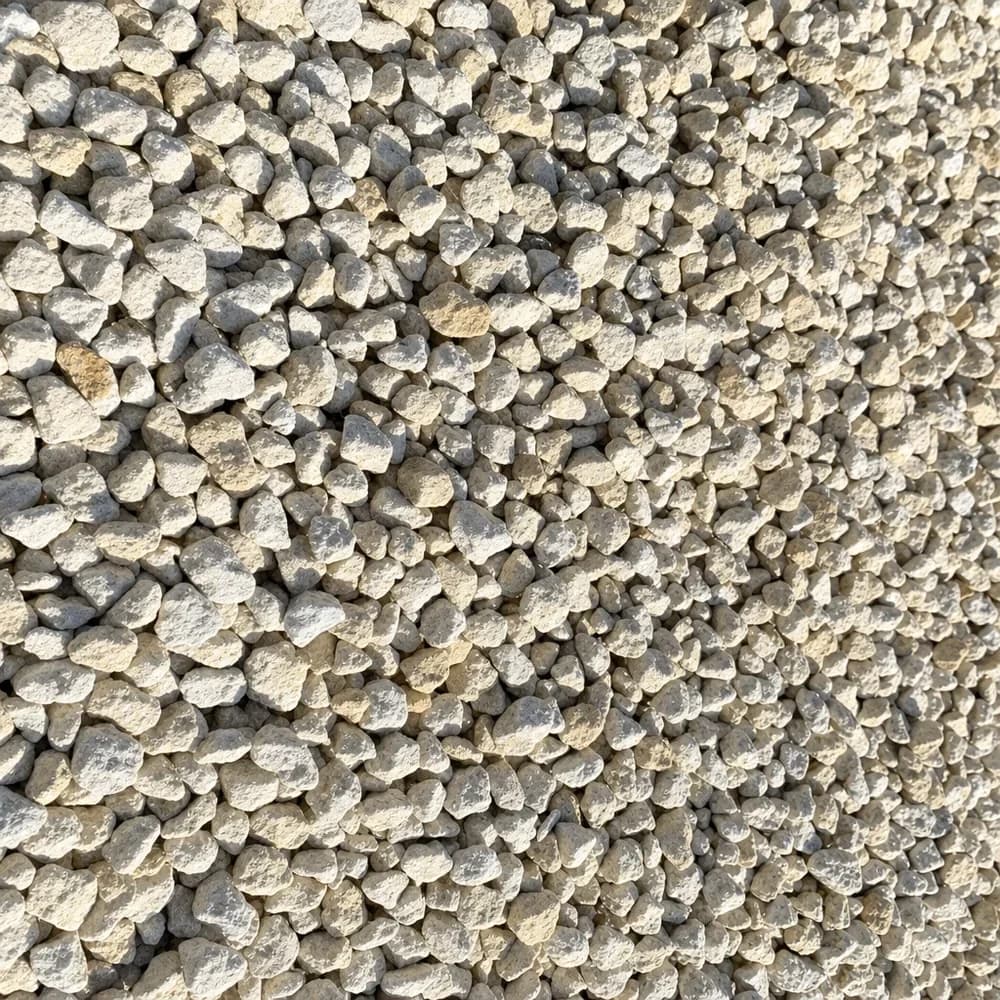
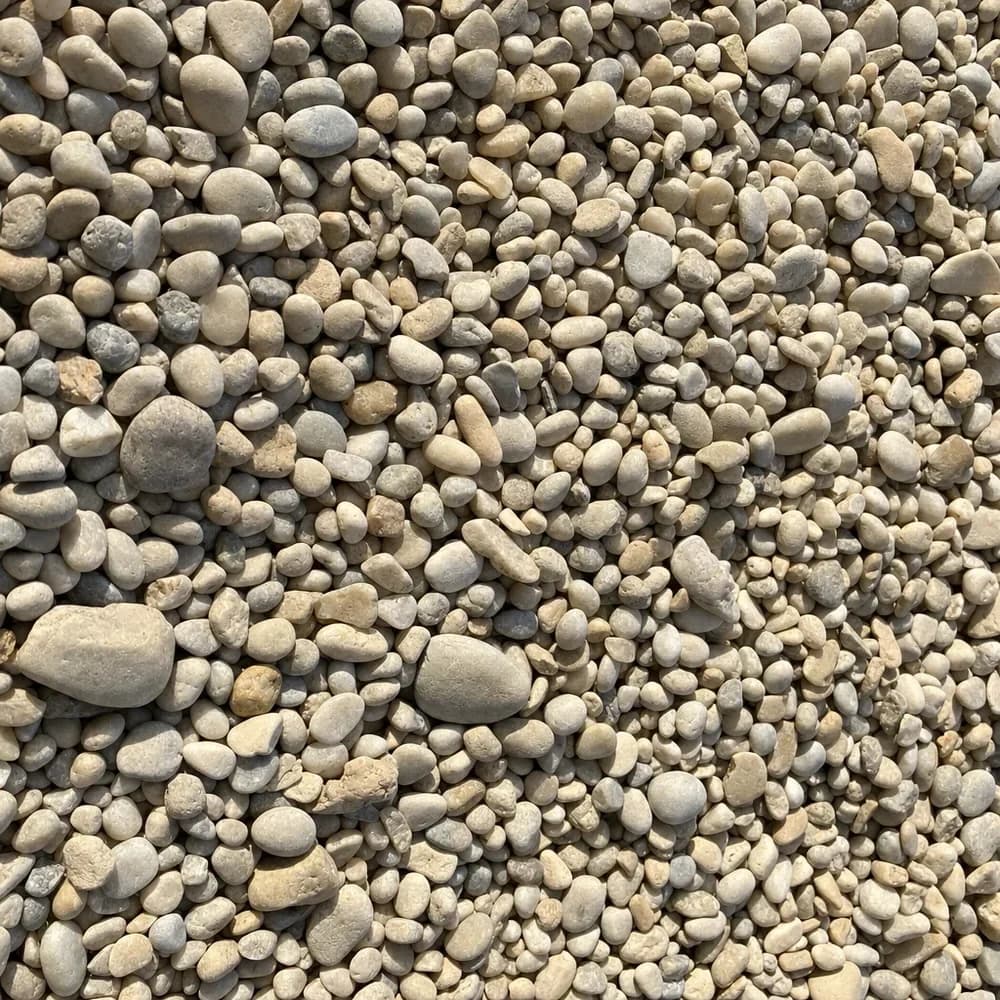
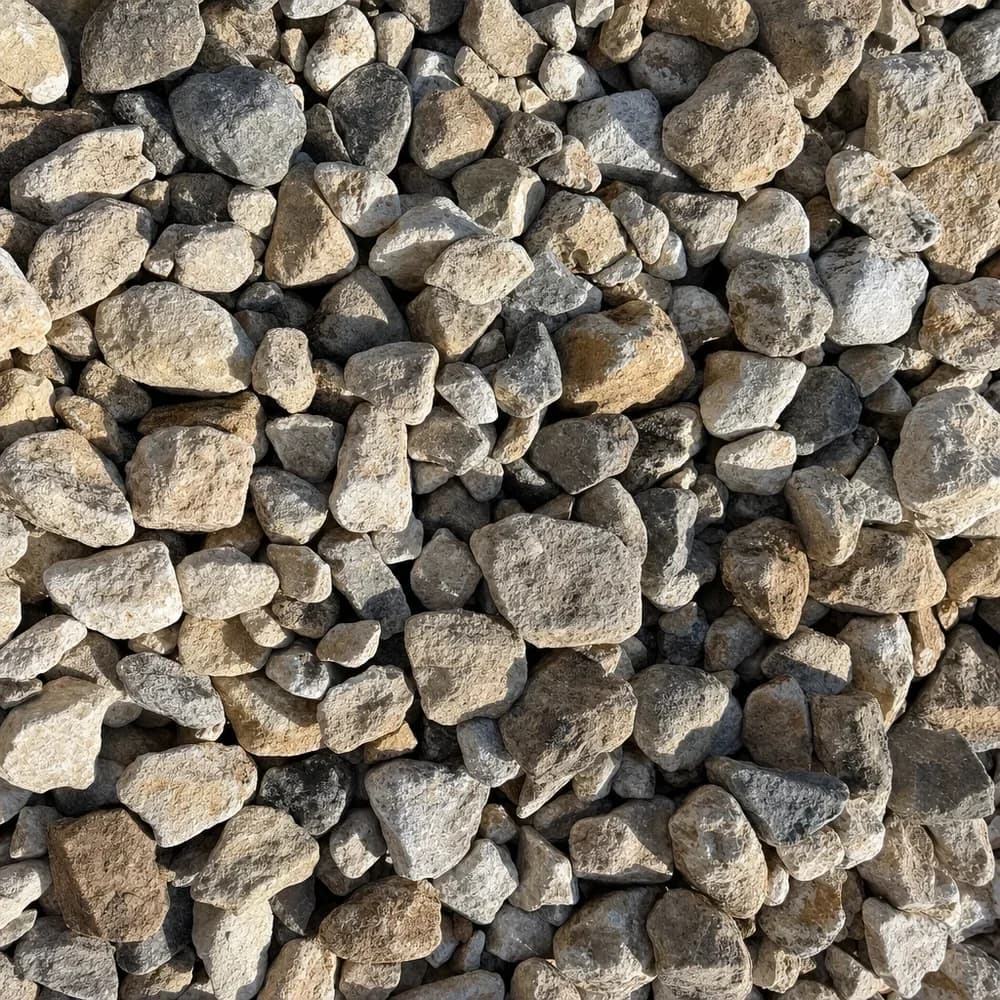
Why Choose Indiana Rock Supply
Aggregate options for homeowners and contractors across Indiana
Aggregate Materials
Materials for a range of projects.
Pricing Details
Per-ton pricing is provided for your order.
FREE Delivery
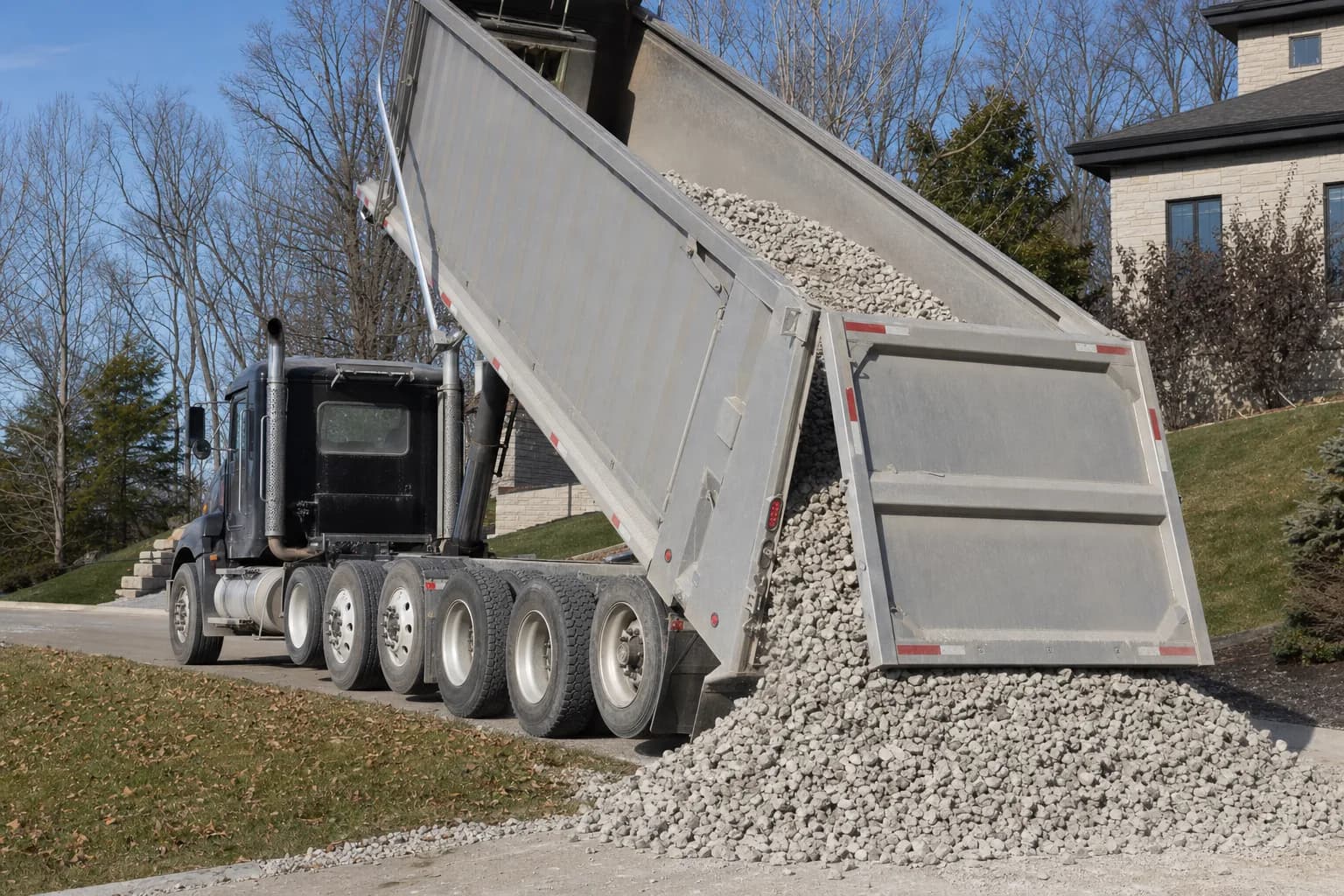
FREE dump truck delivery across Indiana, available in as fast as 2 business days.
Order Support
Get support by phone, email, or text.
Aggregate delivery across Indiana
Free delivery across Indiana, including Indianapolis, Fort Wayne, Evansville, South Bend and Carmel.
Stone commonly used in Indiana includes Salem limestone, dolomite and glacial gravel. Orders are delivered by dump truck to jobs from the Ohio River, the Wabash River and the Indiana Dunes, with delivery included in the price.
Common projects here include #53 driveways, farm lanes and pole barn pads. Flat till plains drain slowly and the water table sits high in the north; a base without an outlet stays wet all winter. Frost goes to about 32 inches in Indiana, so plan base depth around it.
What we call it in Indiana
If your project follows an engineering or road-agency spec, compare it with the size and grading listed on each product page.
Popular delivery areas in Indiana
- Indianapolis
- Fort Wayne
- Evansville
- Fishers
- South Bend
- Carmel
- Bloomington
- Hammond
- Noblesville
- Lafayette
- Greenwood
- Gary
- Muncie
- Westfield
- Kokomo
- Terre Haute
- Anderson
- Elkhart
- Jeffersonville
- Columbus
- Mishawaka
- West Lafayette
- Portage
- Plainfield
Every Indiana city we deliver to, A to Z · Gravel delivery across Indiana · All counties and cities we serve
Quickly Calculate How Much You Need
Simple Ordering Steps
Select Your Aggregate
Review our catalogue and choose a product suited to your project
Plan Your Order
Start with the calculator to work out the gravel quantity for your order. The process is simple and quick.
Checkout and Delivery
Enter your information, and we'll deliver the order to your door.
Most people arrive here in the same few weeks of the year. The frost has come out, the lane is rutted where the truck sits, and the blade is pulling up clay instead of stone. On flat till ground that holds water for days after the rain stops, gravel delivery is less about picking a good-looking rock than about getting enough of the right dense graded stone under the traffic before the next wet spell. What follows is the job in the order it happens: measure it, choose the material, order it, then make room for the truck.
Measuring a Lane, Pad or Bed Before You Book Gravel Delivery
Work in feet for length and width, and in inches for depth. The material calculators take it from there. Each one accepts a rectangle, a circle by its diameter, or up to five separate pieces totaled together, plus a depth anywhere from 0.25 to 24 inches. What comes back is cubic yards, tons and cubic feet, and there is a box, ticked by default, that adds 5 percent for spread and spillage (10 percent on dirt, crusher run, road base and paver base).
Take a lane 240 feet long and 10 feet wide, built at 4 inches of base. That is 2,400 square feet. Four inches is 0.333 feet, so 2,400 x 0.333 comes to 800 cubic feet, and 800 divided by 27 is 29.6 cubic yards. This site publishes #53 stone at about 3,000 lb per cubic yard, roughly 1.50 tons per yard, which puts that lane near 44.4 tons. It is a sample layout, not anyone's order, but the arithmetic is the same on your own.
Sorting #53 From #73 and Driveway Stone
The three products confused most often in this state all look similar in a pile and behave nothing alike under a loaded axle.
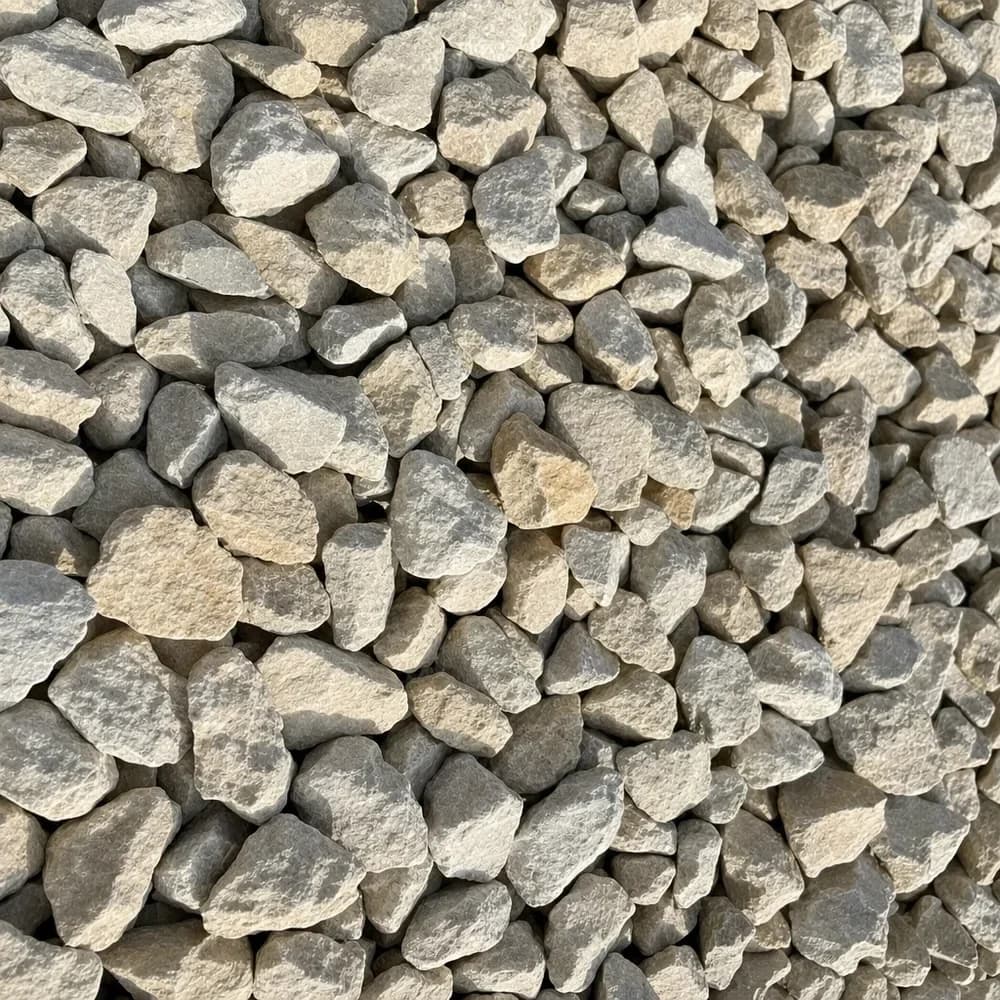
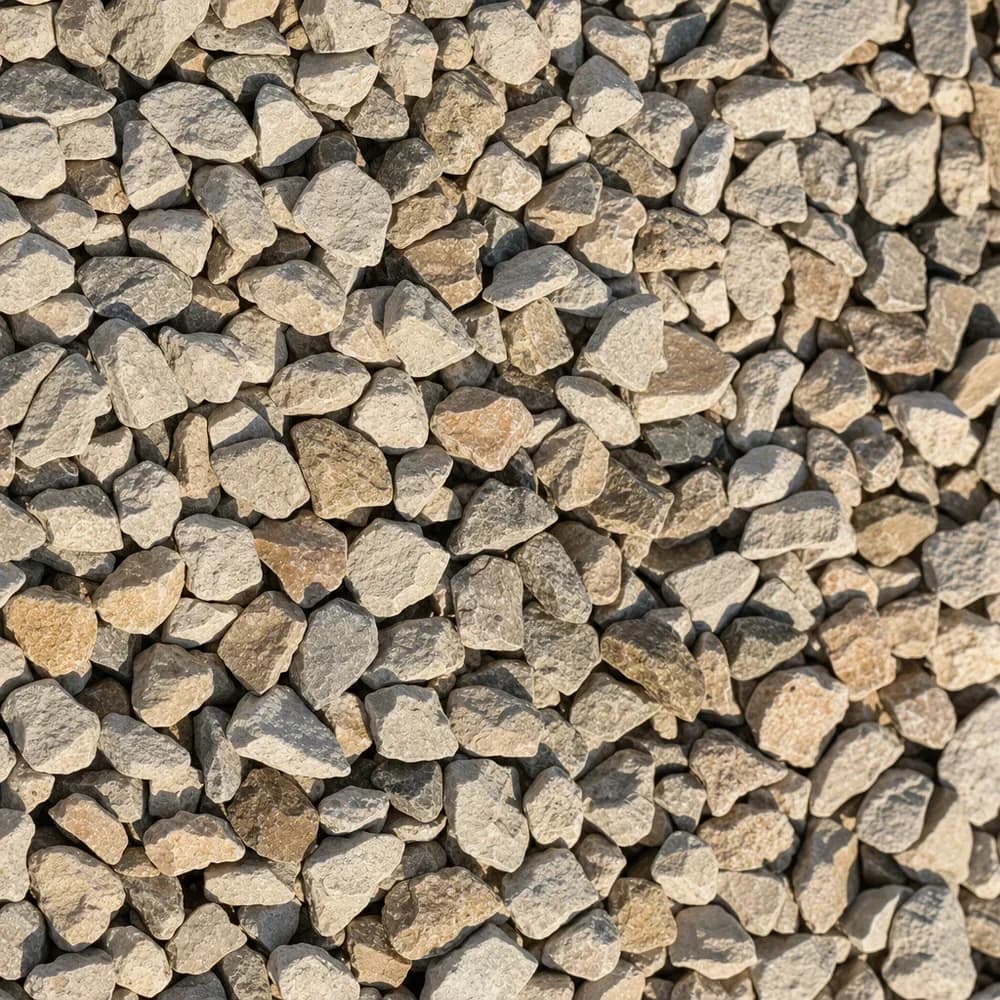
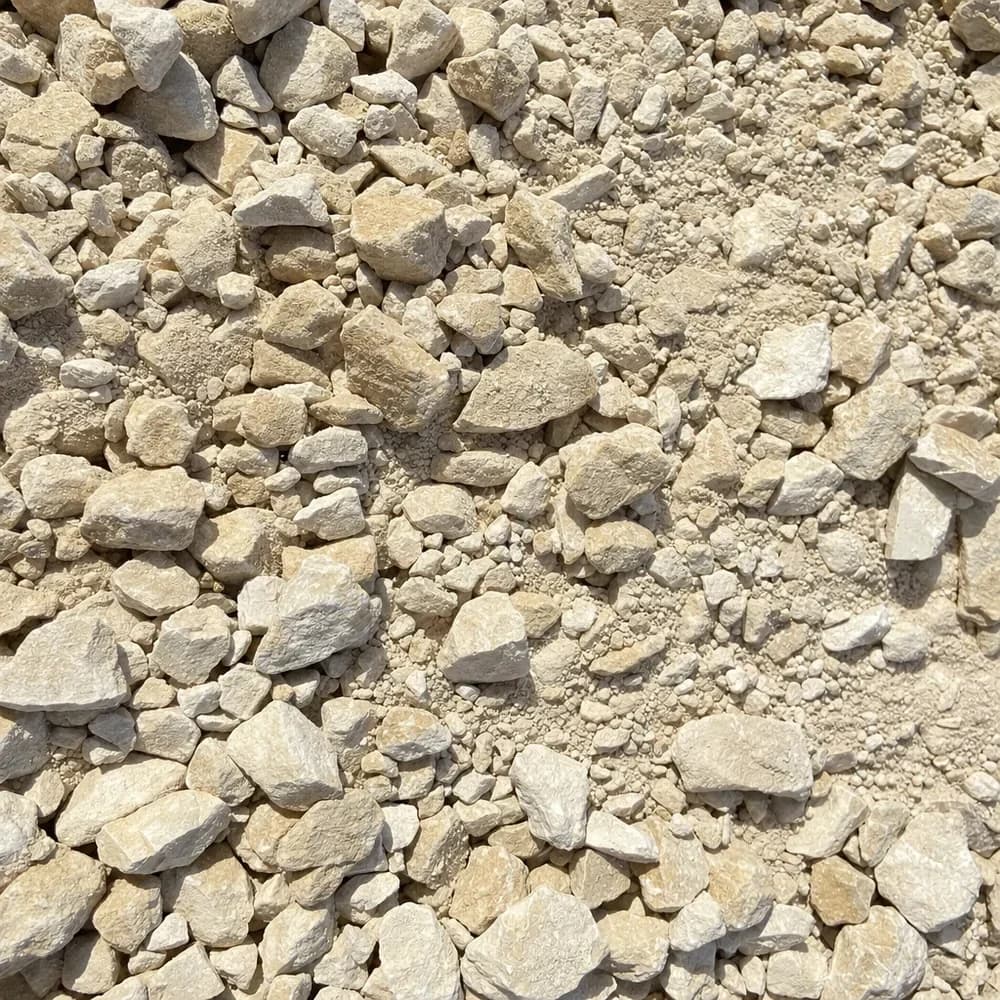
- #53 stone is the base. One inch minus, graded with binding fines, and INDOT specifies it as compacted aggregate size number 53. It packs hard and carries weight.
- #73 stone is the finer dense graded size. It tops and resurfaces a lane or a shoulder where you want a tighter, smoother pack over something already firm.
- Driveway stone is the surfacing course at 3/4 inch, and walkway gravel is its smaller cousin for garden paths.
- #8 stone is a clean single size, common here as a drive topping and in pipe bedding.
Those size numbers describe grading rather than quality, and none of them is a certificate that arrives with the load. Where a job follows an engineered specification, read the grading printed on the product page against the document governing it.
A new lane gets two layers, not one thick dump. The lower course carries the load, the top course sheds water and takes the wear.
Stone That Gives Water Somewhere to Go on Tile-Drained Ground
So much of this farmland runs on tile for a reason: late winter and spring rain lands on ground with no natural outlet. A base with water trapped in it stays soft until June.
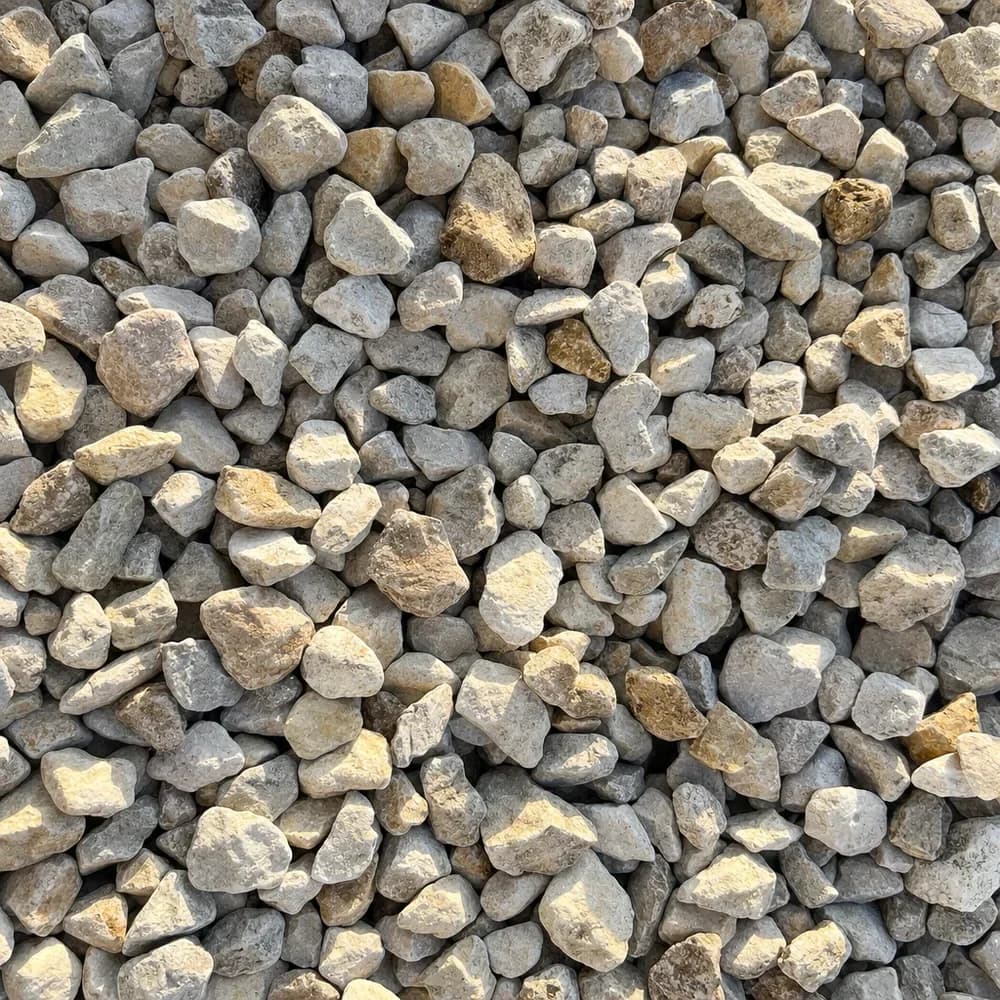
Clean, washed stone is what moves it. #57 stone and 3/4 inch crushed stone go into trench drains and around tile beds. Drain rock handles downspout runs, footing drains and the low corner of a yard that ponds. Where a ditch bank or a culvert outlet is cutting back after a hard rain, rip rap is the size class that stays put, graded locally as revetment, Class 1 and Class 2.
Footing depth is a separate question and a local one. Around Indianapolis the figure in common use is about 30 inches, while counties up north work to deeper numbers. Ask the building department that covers your parcel rather than carrying one figure across the state.
Soil, Fill and Mulch for the Farmstead End of the Job
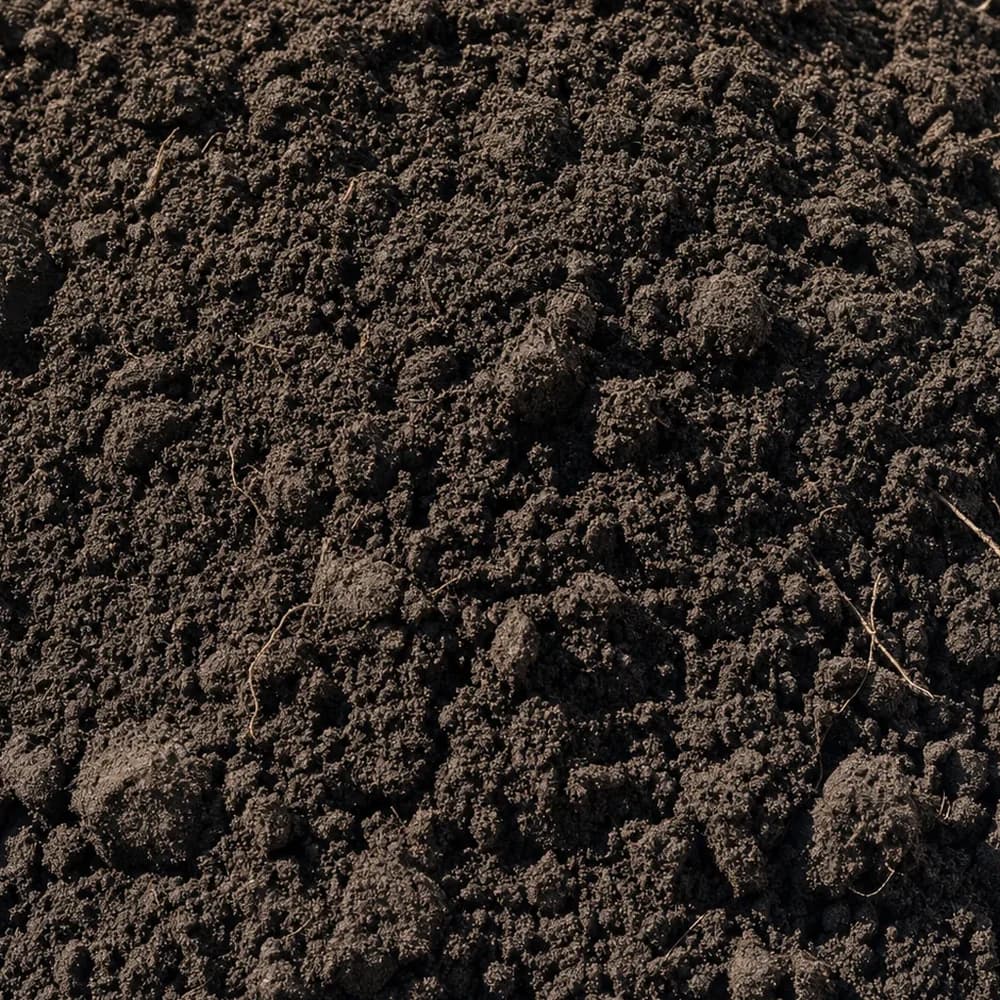
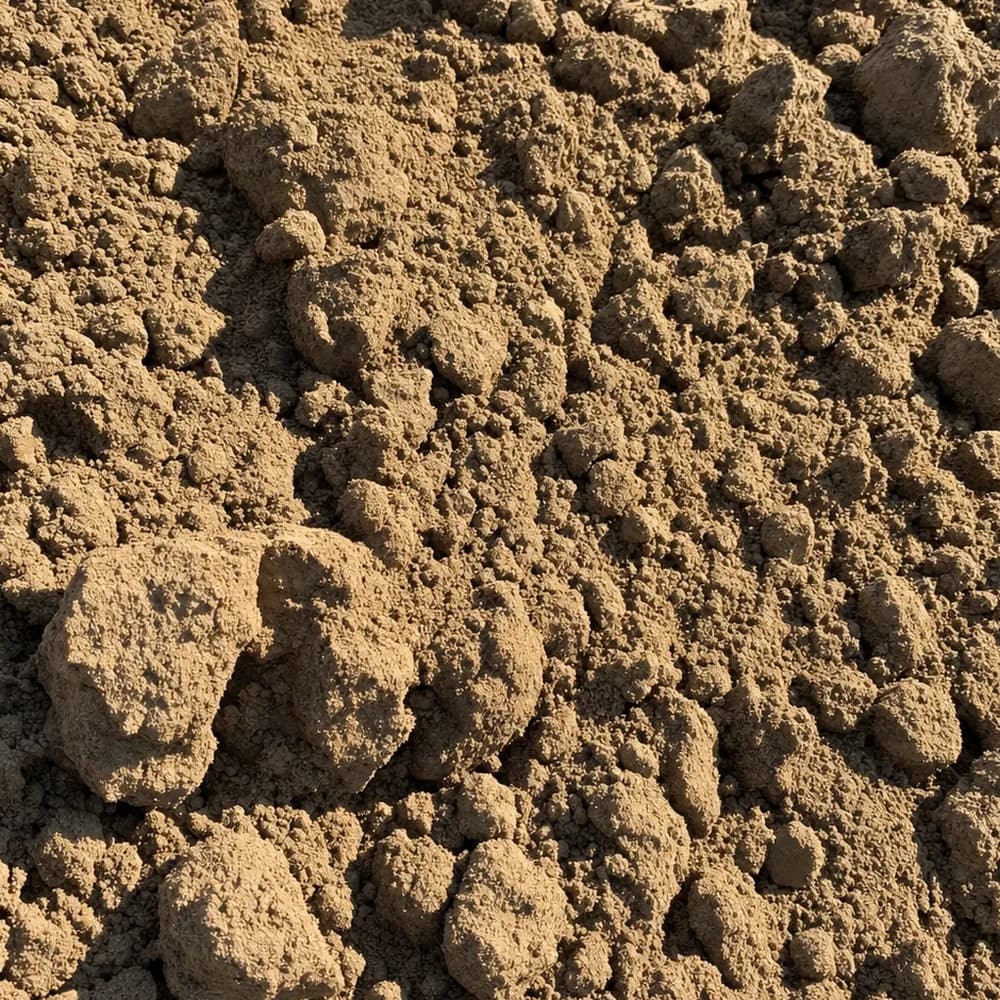
Grade work usually finishes the same week the stone goes down. Fill dirt raises a low spot or backfills before a base goes in. Screened topsoil goes over heavy clay where nothing is left for roots to work into, and garden soil fills raised beds. Shredded mulch holds moisture in beds and tree rings through a humid August. For bedding and joints there is mason sand, washed sand and limestone screenings, and for finished beds, river rock and pea gravel.
Picking a Date and a Drop Spot the Truck Can Actually Reach
Order on the product page by choosing a delivery date and then a quantity. Delivery is arranged at checkout from the ZIP code you enter.
Then walk the approach the way a driver would, and in a wet week stake the pile onto firm ground near the work rather than the soft ground in it. What the truck needs at your end covers the route width, the overhead clearance and marking the spot.
Start with the full catalogue if you know the material, or the calculator if you only know the shape of the hole. The ordering questions page picks up what tends to come next, and how this storefront works covers who handles a load once checkout is done.
Customer Comments
Customer feedback
“Got riprap from them and ordering was no fuss. Price was fair and I'd use them again.”
Paul G.
RipRap
“Had crushed stone delivered by these guys and it showed up right on schedule. The crushed stone was clean and consistent, really happy with the whole thing.”
Wendy N.
#4 Crushed Stone
“Grabbed #57 Stone from this company and it was exactly what I needed. Driver was friendly and took his time placing it right where I wanted.”
Maria F.
#57 Stone
“Decided on natural pea gravel, and it was exactly what I needed. Ordering was simple, and the team made the whole thing easy.”
Tony G.
3/8" Natural Pea Gravel
“Needed railroad ballast and this company made the whole order easy, kept me updated, and showed up when they said they would. Really happy with how it went and I'd definitely order again and recommend them.”
Ryan D.
Railroad Ballast
“Indiana Rock Supply provided a smooth experience all the way through. I would choose this large river rock again for a future project. Good communication and a very positive overall experience.”
Jennifer W.
Large River Rock
Common Questions
Common product and service questions, answered
Have any questions?
We can walk through quantities, help identify gravel appropriate for the job, and coordinate a delivery time that fits your schedule.
Contact us