Fill Dirt for Raising Grade on Indiana Bottomland
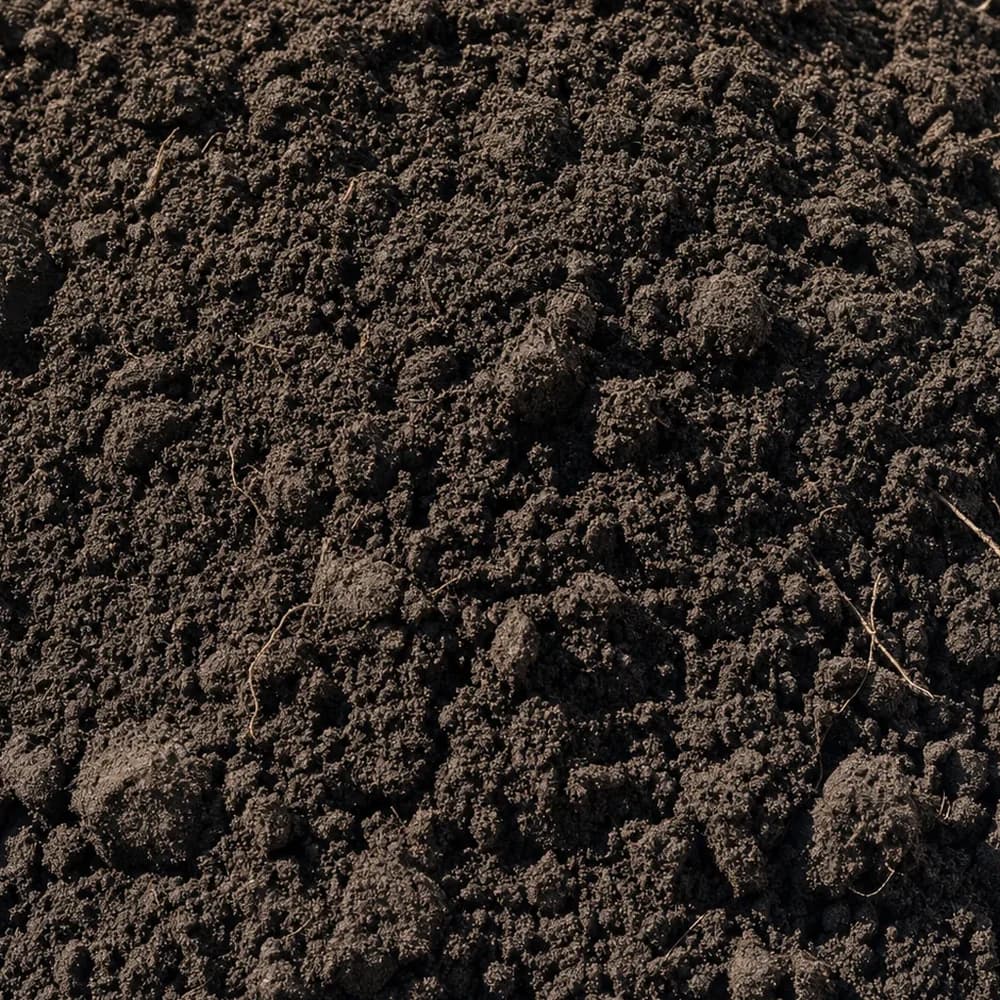
Indiana contractors place Fill Dirt during rough grading to build up low areas, backfill excavations, and prepare a stable site for later work.
- Size: Screened to remove large rocks, roots and debris
- Grading: Minimal organic matter
From $259 for 1 ton, delivery included (larger loads cost significantly less per ton)
Free delivery included
Free delivery anywhere in Indiana
Pick a delivery date
Weekday delivery, earliest Oct 30
“Needed fill dirt for a low spot in my yard, and ordering was painless with the team. Delivery showed up when expected and the fill dirt was exactly what I needed.”
Mike D. · Verified Buyer
Get a Free Quote
Fill out the form and our sales team will get back to you within the hour.
Size and Grading
- Size
- Screened to remove large rocks, roots and debris
- Grading
- Minimal organic matter
Earthwork on the Wabash and Ohio River lowlands is decided by the calendar before it is decided by anything else. Winter and spring are the high-water months down here, when the rivers run up, the lake-bed flats hold water and the loess uplands sit on a fragipan that keeps moisture near the surface. Fill dirt spread into ground in that state will not compact, and it will settle for years afterwards. From late spring through fall, once the silt has dried and the water has dropped, the same load builds a grade that stays where it was put.
The weeks a river-bottom lot is dry enough to take fill dirt
Watch the ground, not the forecast. Silty bottomland looks workable at the surface long before it is workable a foot down. The test is the same one every excavator uses: squeeze a handful, and if it ribbons and shines rather than crumbling, the site is not ready.
Work back from the freeze. Compaction stops once the ground hardens, so a grade built in September has warm weeks to settle and shed a few rains before winter. One built in late autumn goes into the winter loose.
Allow for a wet year. On the lowest ground near the Wabash, the White or the Patoka, some seasons never offer a long dry run at all, and the honest answer is to move the work rather than fight it.
What arrives in a load of screened fill, and what does not
Screened to take out large rocks, roots and debris, with minimal organic matter in it. Those two facts explain everything this material is good at and everything it is not.
Minimal organic content is the point. Organic material breaks down, and what breaks down leaves voids, which is how a fill settles under something built on top of it years later. A mineral fill has nothing much to decay, so it holds the elevation you compacted it to.
The flip side is that nothing will grow in it. It is a structural and shaping material, not a growing medium, and anything to be seeded or planted needs a finish layer of soil placed over it.
Three jobs it starts and the material that finishes each one
| Job | What the fill dirt does | What actually finishes it |
|---|---|---|
| Pond or shoreline edge | Builds and shapes the bank behind the waterline, tied into existing ground | The wet edge itself needs armoring with rip rap, sized for the wave and flow it takes |
| Construction entrance | Levels and firms the approach so the entrance has something to sit on | The running surface is heavy stone, #4 stone or railroad ballast |
| Paver patio base | Brings a low or uneven subgrade up to the right elevation, compacted in lifts | A compacted #53 stone base, then stone screenings as the setting bed |
Fill dirt is almost never the last material on a job. It gets the ground to the right height and shape, and something specified for the surface goes over it.
Lifts, compaction and settlement on loess and river silt
Build in lifts. Six to eight inches of loose material, compacted, then the next layer. A deep dump compacted from the top firms the upper few inches and leaves everything below it loose, which shows up as a dip two years later.
Order for the finished grade, then expect to add. Loose fill occupies more space than compacted fill, so the volume you measure off the plan is the compacted volume and the load has to cover the difference. How much depends on the material and the effort, which is why it is better to measure, place, check the level and order a top-up than to guess a percentage at the start.
Anything structural is somebody else's sign-off. Fill under footings, pavement or a building is engineered fill with testing behind it, and that is a matter for the designer and the local building department rather than a material choice.
Yards and tons for a pond bank, an entrance approach and a patio subgrade
Hypothetical layouts. Length times width times depth in feet, divided by 27 for cubic yards. This site publishes fill dirt at about 2,400 lb per cubic yard dry, which is 1.20 tons per yard, and up to 3,000 lb when it is wet, or 1.50 tons per yard. Weather at the time of loading decides which end you are nearer.
A pond bank, 60 feet long and 8 feet wide, averaging 10 inches deep. 60 x 8 = 480 square feet. Ten inches is 0.833 feet, so 480 x 0.833 = 400 cubic feet. 400 divided by 27 = 14.8 cubic yards, which is about 17.8 tons dry and up to 22.2 tons wet.
A construction entrance approach, 14 feet by 40 feet at 6 inches of fill. 14 x 40 = 560 square feet, and 560 x 0.5 = 280 cubic feet. That is 10.4 cubic yards, roughly 12.4 tons dry.
A patio subgrade, 16 feet by 12 feet, 4 inches low. 16 x 12 = 192 square feet, and 192 x 0.333 = 64 cubic feet, or 2.4 cubic yards, about 2.8 tons dry. The compacted stone base going over it is a separate 3.6 cubic yards at 6 inches.
What the yard needs to look like when the truck arrives
Put your own measurements into the dirt calculator, which takes length and width in feet, depth in inches, a circle or up to five separate areas, and adds 10 percent by default for the margin a compacted lift always takes. Then pick a delivery date and the tonnage on this page, with delivery arranged from the ZIP code entered at checkout.
Choose the dump spot for the truck, not for the wheelbarrow run. The driver needs firm standing and clear space above to raise the bed, and on bottomland in a damp week that usually means the drive or a stoned apron rather than the lawn. Have the machine on site the same day if one is spreading, and open the route in beforehand. If you want the volume checked against a survey level or a staked grade before the load is booked, send the numbers through the contact form.
Quickly Calculate How Much You Need
Material: Fill Dirt
How to Measure
Measure the length and width of your project area in feet
Decide on depth in inches (2" for landscaping, 4" for driveways)
Enter the values above and we'll calculate the tonnage you need
Need help figuring out the right amount? We can help!
Call or text us at (812) 721-8126 and we'll help you calculate the right quantity for your project.
Not sure how much you need? The Dirt Calculator has depth guides, coverage charts and worked examples for this material.
Frequently Asked Questions About Fill Dirt
Customer Reviews
Got fill dirt from Indiana Rock Supply and the price felt fair for what I needed. Ordering was smooth, and I'm really happy with how it all went.
Bill E. · Evansville, IN · Verified Buyer
Needed fill dirt for a low spot in my yard, and ordering was painless with the team. Delivery showed up when expected and the fill dirt was exactly what I needed.
Mike D. · South Bend, IN · Verified Buyer
I'm really happy with how easy it was and would definitely order again.
Ashley S. · Fort Wayne, IN · Verified Buyer
Went with Indiana Rock Supply for fill dirt, and they made the whole thing super easy. They kept me updated the whole time, and the delivery showed up right when they said it would.
Pat I. · Carmel, IN · Verified Buyer
Fill Dirt has 4 verified customer reviews with an average rating of 5 out of 5.