Mason Sand for Indiana Paver Beds and Mortar Mixes
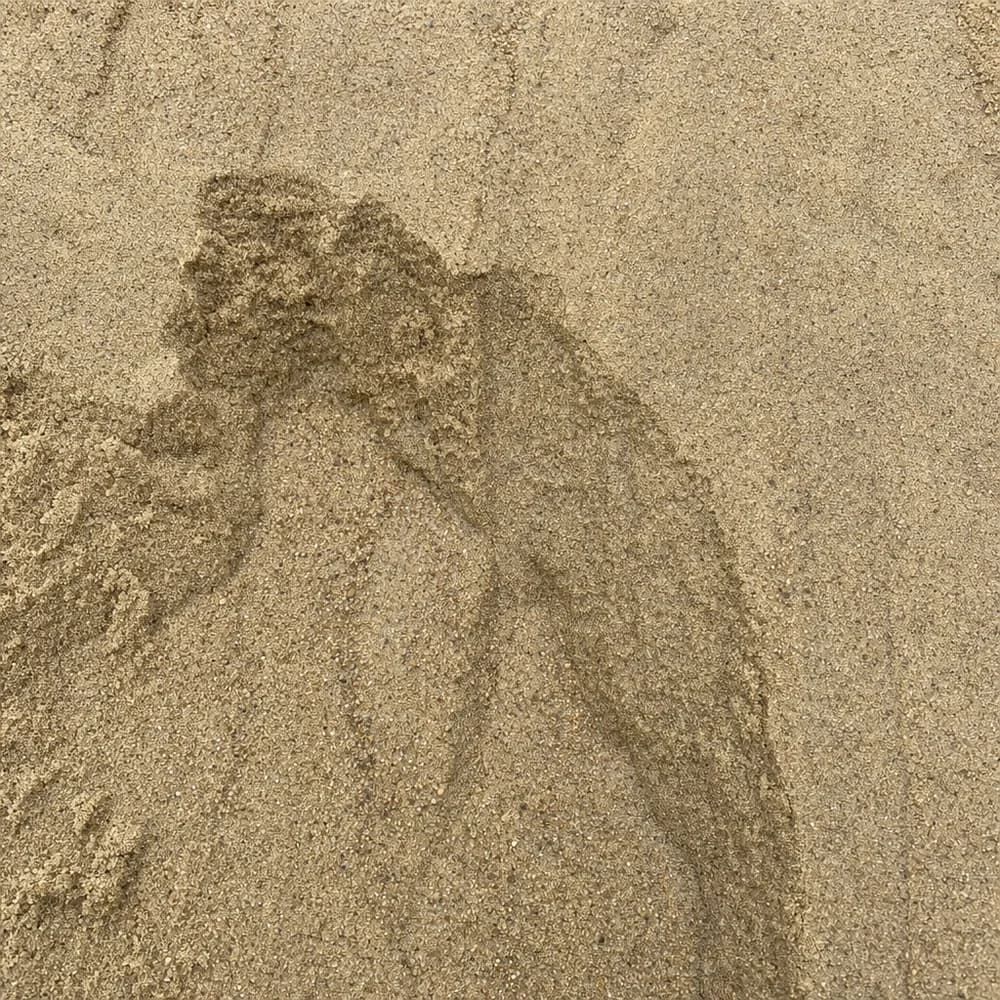
For an Indiana patio or masonry project, Mason Sand provides a smooth washed texture for pavers, mortar, and play areas.
- Size: Ultra-fine, consistent grain size
- Grading: Washed to remove clay, silt and organic impurities
From $479 for 1 ton, delivery included (larger loads cost significantly less per ton)
Free delivery included
Free delivery anywhere in Indiana
Pick a delivery date
Weekday delivery, earliest Oct 30
“Got mason sand from the team with free delivery, really happy with it and I'd definitely order again and recommend them.”
Rachel N. · Verified Buyer
Get a Free Quote
Fill out the form and our sales team will get back to you within the hour.
Size and Grading
- Size
- Ultra-fine, consistent grain size
- Grading
- Washed to remove clay, silt and organic impurities
Up in the dune and lake plain country, where the native ground is already sand for the first several feet, the sand people actually order is mason sand, and almost always for the same reason: a paver patio or apron that has to end up flat and stay flat. It is the fine, washed material that beds the pavers and then sweeps into the joints between them. Nothing else on the yard does that job as cleanly, and nothing else gets asked to do so many jobs it was never meant for.
| Spec | Figure |
|---|---|
| Size | Ultra-fine, consistent grain size |
| Grading | Washed to remove clay, silt and organic impurities |
Washing is what makes it usable near the surface. Clay and silt left in a sand would hold water in the bed, stain a paver face and weaken a mortar mix. Taking them out leaves a clean, even material that handles the same way from one load to the next.
What mason sand does on sand plain and on Calumet clay
The north is not one kind of ground. Dune and beach ridge sand along the Lake Michigan shore drains almost too well, and on it a paver bed sits on a subgrade that will never hold water but will happily let fines wash down through it over the years. On the clay till ridges and the old lake plain a short distance inland, the opposite problem shows up: water perches under the patio, freezes, and lifts the whole thing in February.
Neither problem is solved by sand. That is the single most useful thing to know about this material. The bedding layer is a thin setting course, not a base. A compacted layer of #53 stone underneath does the structural work and gives the water somewhere to go, and the sand goes over it at the thickness of a bed, not a foundation. Where the flats stay wet through a long winter, that base has to have an outlet or the frost will find it.
Laying the bed and filling the joints
Screed the sand to an even thickness over a base that is already compacted and already at the fall you want, then set pavers straight onto it without disturbing what you have leveled. Do not compact the bed before setting, and do not use extra sand to correct a base that is out of level. It will settle back to the shape of the base underneath, taking the pavers with it.
Once the pavers are down, sweep dry sand into the joints and vibrate it in, topping up until the joints stop taking material. Keep the whole area edged so the bed has something to bear against; an unedged patio loses its outside row first.
Away from hardscape, the same washing that makes it clean makes it suitable for sandboxes and for a volleyball court, where a fine, even grain is what people want underfoot. It is also the fine aggregate in mortar, stucco and grout mixes, which is where its other name comes from.
Against the two materials it is most often confused with
| Mason Sand | Washed Sand | Stone Screenings | |
|---|---|---|---|
| Grain | Ultra-fine, uniform | Coarser | Crushed fines with small stone |
| Feel underfoot | Soft, smooth | Gritty | Sharp, packs hard |
| Bedding pavers | Common choice, sets easily | Coarser bed, firmer | Packs tight, harder to screed |
| Mortar work | Made for it | Too coarse for fine joints | Not a mortar sand |
| Play and court use | Comfortable washed grain | Too sharp | No |
If the patio is going to carry a vehicle, take advice on the bedding material before you order, because the finer the sand, the more it will move under concentrated load. For general foot-traffic patios, walks and aprons, the fine washed grain is the straightforward pick.
Bedding a garage apron, a splash area and a wall backfill
Hypothetical jobs, worked through so you can repeat the method. Length times width times depth in feet, divided by 27, gives cubic yards.
Paver bedding for a garage apron, 20 feet by 24 feet, bed 1 inch thick. 20 x 24 = 480 square feet. One inch is 0.083 feet. 480 x 0.083 = 40 cubic feet. 40 divided by 27 = 1.5 cubic yards.
The same bed under a shed floor, 12 feet by 14 feet at 1 inch. 12 x 14 = 168 square feet. 168 x 0.083 = 14 cubic feet, which is 0.5 cubic yards. Small quantities like this are the ones people underestimate, because a yard of sand looks like far more than it covers once it is screeded flat.
A splash area under a downspout, 4 feet by 3 feet at 2 inches. 4 x 3 = 12 square feet. Two inches is 0.167 feet. 12 x 0.167 = 2 cubic feet, barely a fifteenth of a yard, and the wrong material anyway: concentrated water cuts a hole straight through fine sand. Use 3/4 inch crushed stone or river rock there instead.
Backfill behind a retaining wall, 24 feet long, a 12 inch zone, 3 feet high. 24 x 1 x 3 = 72 cubic feet, or 2.7 cubic yards. Again, not the job for fine sand. That zone wants free-draining washed stone such as #57 stone, so water does not build up behind the wall through a freeze-thaw winter.
At the weight this site publishes for mason and washed sand, about 2,700 lb per cubic yard or roughly 1.35 tons per yard, the two bedding jobs above come to approximately 2.0 tons and 0.7 tons.
Sand is sold by weight, so put your own measurements through the sand calculator, which takes length, width and depth, handles a circle or up to five areas, and adds 5 percent by default for spread and loss.
Ordering and the day it arrives
Choose a delivery date, then a quantity, on this page. Delivery is set from the ZIP code you enter at checkout, and the truck needs a route in and firm ground where it can raise a bed. Pick a dump spot on hard standing close to the work, because sand is the one material you cannot scrape cleanly off grass. If your approach is tight or the work is round the back, say so through the contact page before you book the date.
Quickly Calculate How Much You Need
Material: Mason Sand
How to Measure
Measure the length and width of your project area in feet
Decide on depth in inches (2" for landscaping, 4" for driveways)
Enter the values above and we'll calculate the tonnage you need
Need help figuring out the right amount? We can help!
Call or text us at (812) 721-8126 and we'll help you calculate the right quantity for your project.
Not sure how much you need? The Sand Calculator has depth guides, coverage charts and worked examples for this material.
Frequently Asked Questions About Mason Sand
Customer Reviews
Grabbed mason sand from the team, and I'm really happy with the quality and fair pricing.
Brian F. · Indianapolis, IN · Verified Buyer
Got mason sand from these guys and the free delivery made it super easy. I'm really happy with it and would definitely order again.
Christine E. · Indianapolis, IN · Verified Buyer
Ordered mason sand from Indiana Rock Supply and it showed up right when I needed it. The driver was friendly and really careful about where he placed it, which I appreciated.
Heather J. · Carmel, IN · Verified Buyer
Got mason sand from the team with free delivery, really happy with it and I'd definitely order again and recommend them.
Rachel N. · South Bend, IN · Verified Buyer
Needed mason sand for a small project, and the team made it super easy. They kept me updated the whole time, and the delivery went great.
Kelly C. · South Bend, IN · Verified Buyer
Mason Sand has 5 verified customer reviews with an average rating of 5 out of 5.