Garden Soil for Raised Beds on Southern Indiana Flats
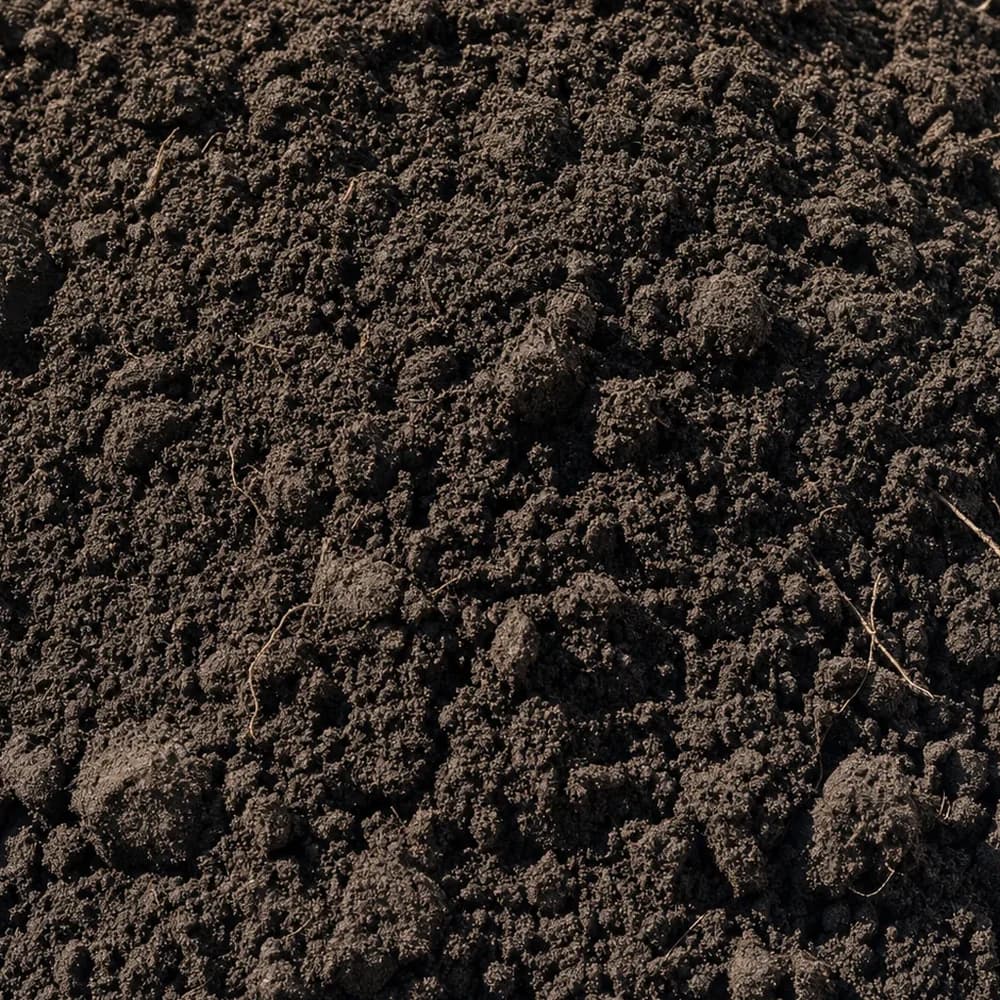
For an Indiana farmstead vegetable plot or planted border, Garden Soil offers compost-enriched growing material ready for planting.
- Size: Nutrient-enriched soil blend
- Grading: Enhanced with organic compost
From $487 for 1 ton, delivery included (larger loads cost significantly less per ton)
Free delivery included
Free delivery anywhere in Indiana
Pick a delivery date
Weekday delivery, earliest Oct 30
“Got garden soil delivered by the team and it was good value for the amount I got. I'd definitely order again and recommend them.”
Tony E. · Verified Buyer
Get a Free Quote
Fill out the form and our sales team will get back to you within the hour.
Size and Grading
- Size
- Nutrient-enriched soil blend
- Grading
- Enhanced with organic compost
On the broad silty flats of the southeast, beds tend to go up on legs for one reason: the ground underneath them perches water on a dense fragipan and stays wet into late spring. That is why so many orders here are for garden soil rather than for top soil, and why the two get confused at the point of ordering. One is a growing blend for a defined planting area. The other is a screened soil for lawns and regrading. Buying the wrong one is not a disaster, but it is a truckload of the wrong thing in a season with a short window.
| Spec | Figure |
|---|---|
| Blend | Nutrient-enriched soil blend |
| Grading | Enhanced with organic compost |
The compost is what separates it. It opens the structure of the blend so roots can work through it, holds moisture in a dry August and still lets rain move rather than sitting, and feeds the organisms that break organic matter down into something plants can use.
Where garden soil and top soil part company
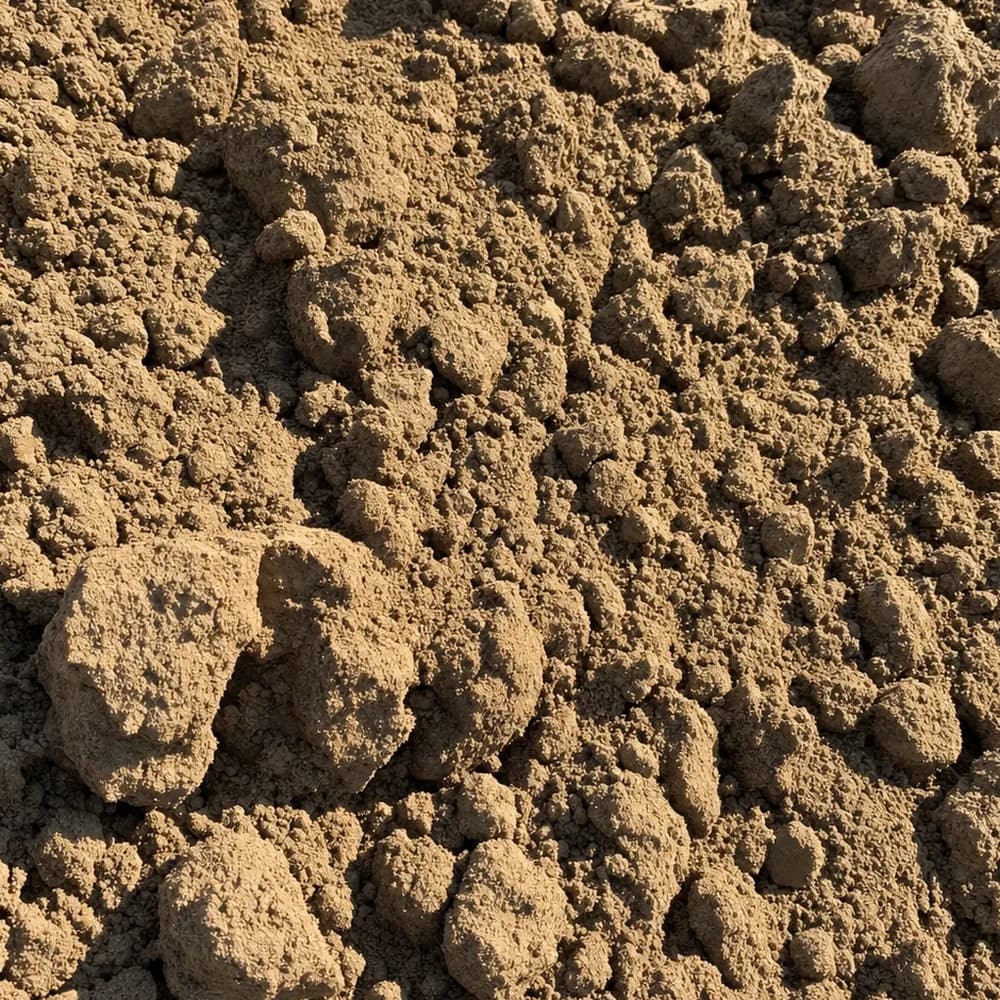
Top soil is a balanced sand, silt and clay soil, screened of rocks and clumps, bought by the volume for lawns, seeding and bringing a low corner up an inch or two. It is the general-purpose soil.
Garden soil is the one that goes inside a boundary: a raised bed, a vegetable plot, a border, a planter. It is blended for what grows in it rather than for covering ground. That difference shows up in how much you buy. A lawn repair is a wide thin layer over a big area. A bed is a small area filled deep. The same cubic yard behaves completely differently in the two jobs.
If the goal is raising the grade of a whole area by a foot or more, neither is the right order. That is fill dirt underneath, with a growing layer over the top once the levels are right.
The weeks on southern flats when beds actually get filled
Water perches on the fragipan flats and sits in the broad valley lowlands through wet winters and springs, and low ground along the Ohio River can flood in the wet season. Working soil in that condition does more harm than leaving it alone, because saturated ground smears and compacts under a boot and a wheelbarrow wheel and then dries into something roots cannot get through.
Two usable windows, then, and they suit different jobs:
- Late spring, once the flats have drained. This is the main one. Build and fill beds when the soil you are standing on crumbles rather than smearing, and plant straight into them.
- Early fall. A quieter window and an underrated one. Beds filled in September settle over winter, so the level you see in April is the real one, and the compost has had months to work before anything is planted into it.
What does not work is midwinter and early spring on this ground. Not because of the soil arriving, but because of the ground it has to be wheelbarrowed across.
Getting the bed ready while you wait for the flats to dry
Use the waiting time on the parts that do not need dry ground.
Decide where water goes before you decide where the bed goes. A bed set across the fall of a wet flat becomes a dam, and the ground above it stays wetter than before. Sited along the contour or on the higher side, it drains.
Work out the depth you actually need. Most vegetables are served by ten to twelve inches of growing medium. Deeper than that is mostly expense, unless you are growing roots or you are building over something impenetrable.
Deal with what is under the bed. On a fragipan flat, a bed set straight on undisturbed ground is sitting on a layer that will not let water down. Loosening the ground under the frame before it is filled, or setting the frame on a shallow coarse layer, gives the profile somewhere for water to go. On a steep Ohio River hillside the opposite applies, and the job is holding the bed level and stopping runoff washing across it.
Where it belongs on a property that is mostly lane and drain run
A working rural property is not all garden, and the planted parts of it are usually leftovers: the strip along a fence line, the island inside a turnaround, the border put back after a drain went in. Those are exactly the places this blend suits, because each is a defined area with an edge, filled to depth, and expected to grow something.
Two uses the pack supports and people forget. A tired bed after several seasons takes a two to three inch top dressing of fresh material spread over the surface, which renews structure and organic matter around roots already in place, no digging required. And a new planting area can be filled and planted as it arrives, without separate amendments being mixed in first.
Keep it inside the boundary. Mixing a growing blend into a base or a drainage layer weakens both.
Cubic yards for a fence-line border, a turnaround island and a drain-line strip
Hypothetical layouts, worked through so the arithmetic is visible. Length times width times depth, all in feet, divided by 27, gives cubic yards. The site publishes about 2,000 lb per cubic yard for a blended garden soil, roughly one ton per cubic yard, so the yard and ton figures here run close to each other.
A planted border along a side-yard dog run, 26 feet by 3 feet, filled 10 inches deep. 26 x 3 = 78 square feet. Ten inches is 0.833 feet, so 78 x 0.833 = 65 cubic feet. 65 divided by 27 = 2.4 cubic yards, about 2.4 tons.
A raised island bed inside a gravel turnaround, 14 feet by 6 feet at 14 inches. 14 x 6 = 84 square feet. Fourteen inches is 1.167 feet, so 84 x 1.167 = 98 cubic feet. 98 divided by 27 = 3.6 cubic yards, roughly 3.6 tons.
The border replanted over a French drain run along a foundation, 34 feet by 2.5 feet at 6 inches. 34 x 2.5 = 85 square feet. Six inches is 0.5 feet, so 85 x 0.5 = 42.5 cubic feet. 42.5 divided by 27 = 1.6 cubic yards, about 1.6 tons. Keep the growing layer above the drainage stone rather than mixed into it, or the drain silts up from the inside.
The soil calculator takes length and width in feet and depth in inches, handles a circle or up to five separate areas, and adds 5 percent by default, which you can untick.
The fall top-up, and what a bed asks for in its second year
Beds drop. Organic matter breaks down, the level falls an inch or two over a season, and in a bed that is the difference between a full profile and roots hitting the frame. Top up in fall, spread two to three inches across the surface, and let winter settle it in rather than digging it through.
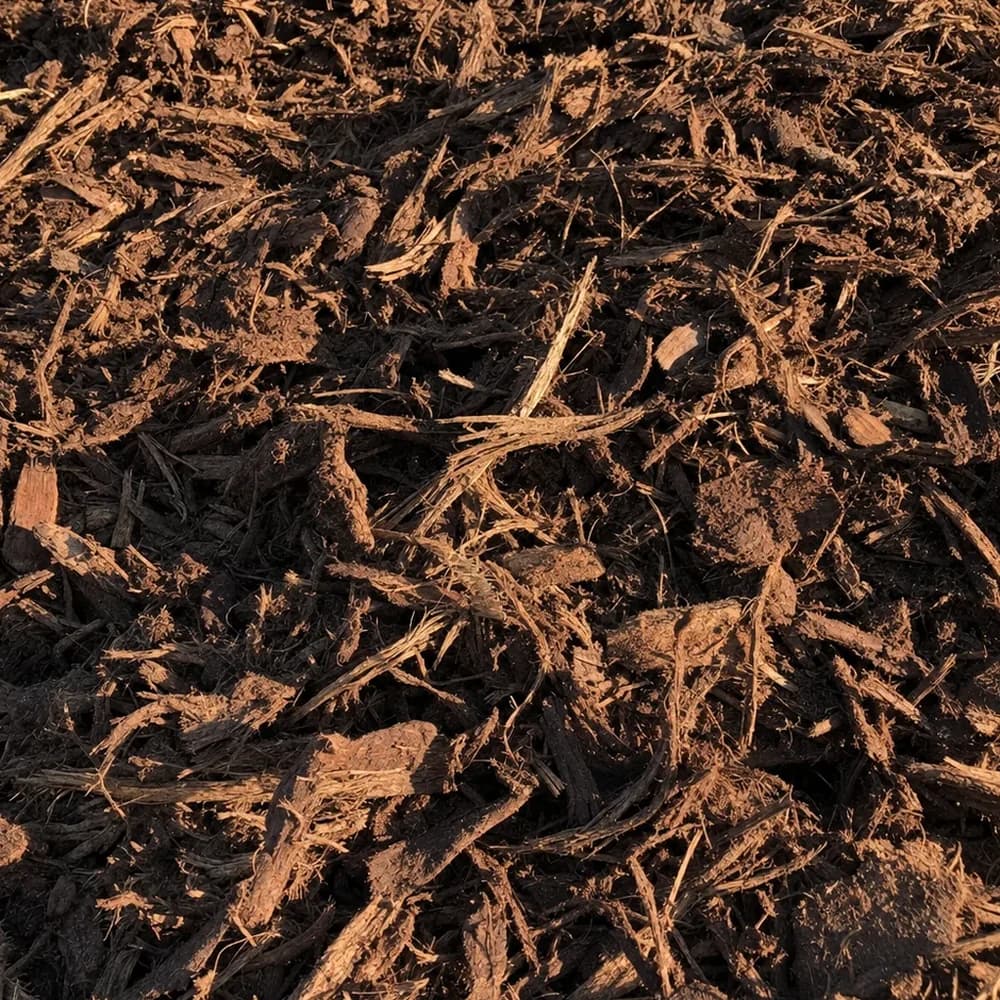
Mulch the surface once things are growing. Shredded mulch holds moisture through a hot, humid summer and keeps heavy rain from beating the surface closed.
To order, pick a date and a quantity on this page, with delivery arranged from your ZIP at checkout. Bulk soil arrives as one heap and has to be wheelbarrowed, so think about where the pile can sit on firm ground within reach of the beds, and put boards down if the run crosses lawn. If you want a bed layout checked against a volume before booking, send the measurements through the contact page.
Quickly Calculate How Much You Need
Material: Garden Soil
How to Measure
Measure the length and width of your project area in feet
Decide on depth in inches (2" for landscaping, 4" for driveways)
Enter the values above and we'll calculate the tonnage you need
Need help figuring out the right amount? We can help!
Call or text us at (812) 721-8126 and we'll help you calculate the right quantity for your project.
Not sure how much you need? The Soil Calculator has depth guides, coverage charts and worked examples for this material.
Frequently Asked Questions About Garden Soil
Customer Reviews
Got garden soil delivered by the team and it was good value for the amount I got. I'd definitely order again and recommend them.
Tony E. · South Bend, IN · Verified Buyer
Ordered garden soil from these guys and it showed up right when I needed it, would definitely order again and recommend them.
Scott C. · Indianapolis, IN · Verified Buyer
Ordered garden soil from this company and it showed up right when they said it would. The free delivery was a huge plus, and the driver dropped it exactly where I asked. Really happy with the whole thing and would definitely order again.
Eric T. · Carmel, IN · Verified Buyer
I'm really happy with it and would definitely order again, recommend them too.
Rob E. · Fort Wayne, IN · Verified Buyer
Garden Soil has 4 verified customer reviews with an average rating of 5 out of 5.
Garden Soil delivery across Indiana
- Indianapolis
- Fort Wayne
- Evansville
- Fishers
- South Bend
- Carmel
- Bloomington
- Hammond
- Noblesville
- Lafayette
- Greenwood
- Gary