Driveway Gravel for Indiana Hill-Country Drives
For an Indiana farm lane or home entrance, Driveway Gravel provides crushed aggregate that tightens under traffic for a durable access surface.
- Size: 3/4 inch
- Grading: Graded mix of stone sizes
- Type: Crushed stone
From $402 for 1 ton, delivery included (larger loads cost significantly less per ton)
Free delivery included
Free delivery anywhere in Indiana
Pick a delivery date
Weekday delivery, earliest Oct 30
“Had driveway gravel dropped off by the team and it was exactly what I needed. Free delivery was a nice bonus, and I'd definitely order from them again.”
Luis N. · Verified Buyer
Get a Free Quote
Fill out the form and our sales team will get back to you within the hour.
Size and Grading
- Size
- 3/4 inch
- Grading
- Graded mix of stone sizes
- Type
- Crushed stone
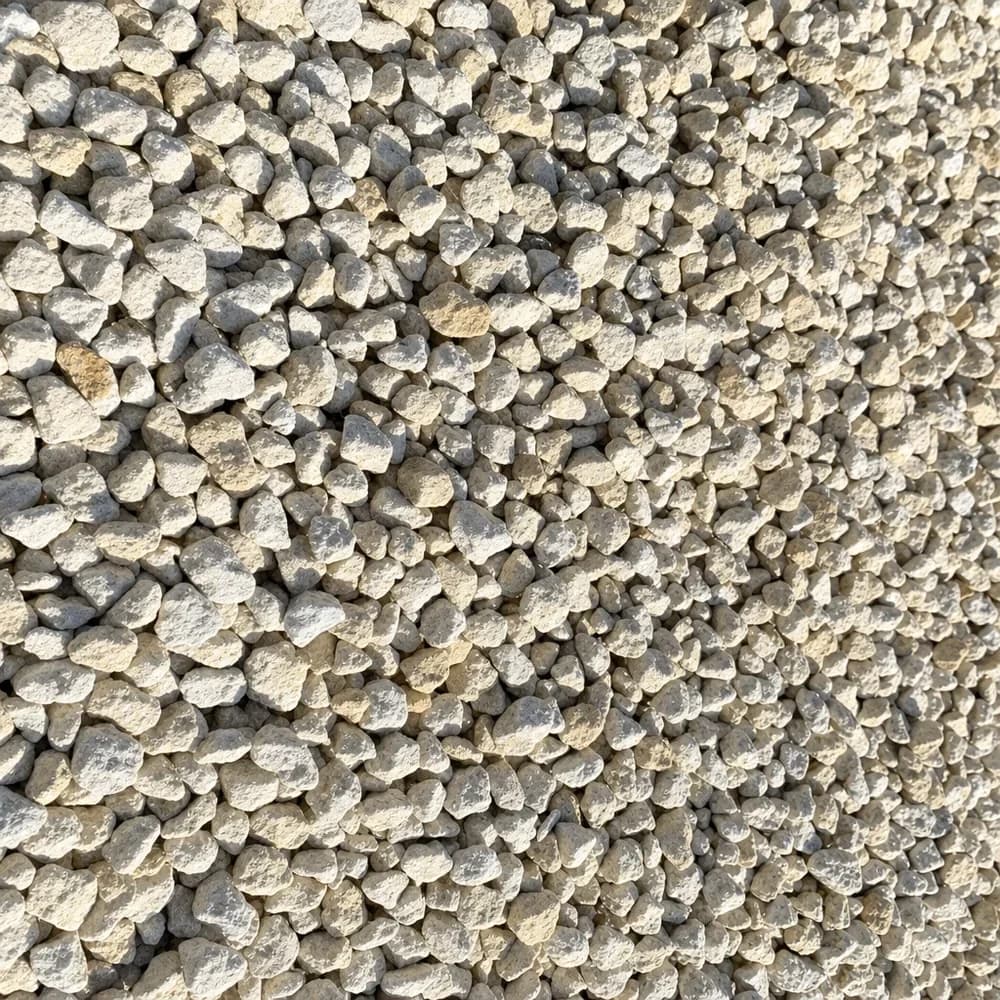
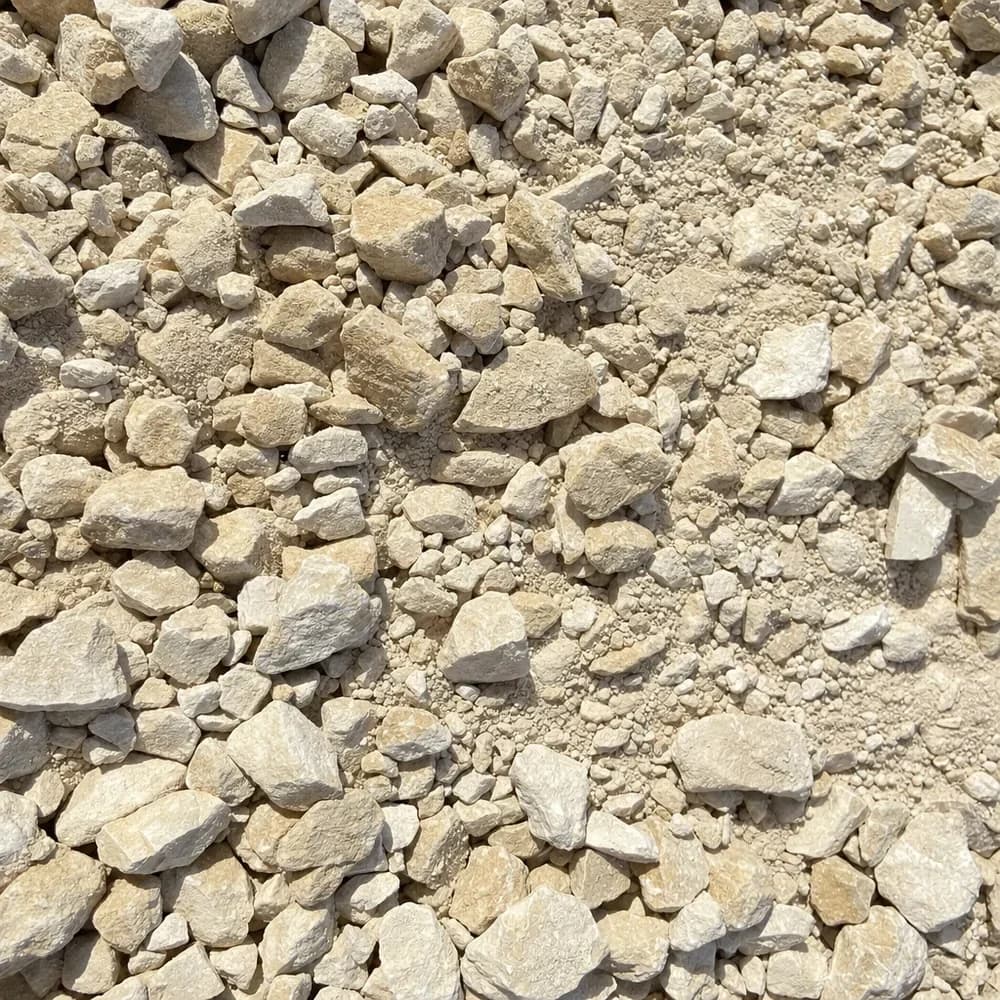
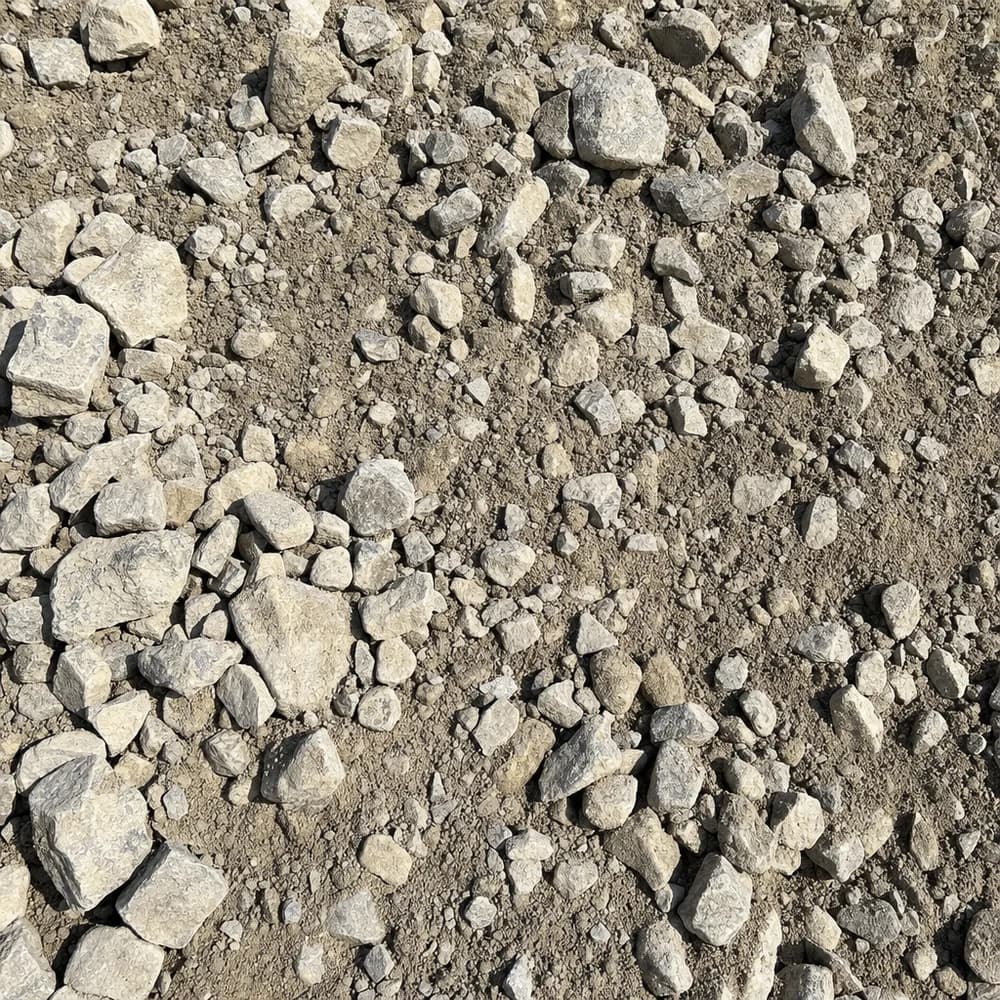
Stand at a fresh pile of driveway gravel on a ridge drive in the unglaciated south and you can read it with your hands. The pieces run to about three quarters of an inch, they are crushed rather than rounded, and the edges catch on each other when you push a handful around. There is grit in among the larger pieces, not a bag of clean marbles. That mixed grading is the reason a drive on steep clay holds together under a loaded pickup instead of rolling downhill in front of the tires.
Driveway gravel next to the three materials it gets swapped for
| Material | What it is | Where it goes in the build |
|---|---|---|
| Driveway Gravel | 3/4 inch crushed stone, graded mix of sizes | The layer you drive on |
| #53 stone | 1 inch minus with binding fines | The compacted layer underneath that carries the load |
| #73 stone | Finer dense graded stone with fines | Topping and resurfacing where a tight, smooth pack is wanted |
| #8 stone | Clean single size, no fines | Drainage and pipe bedding, and a loose drive topping |
The distinction people get wrong is between the first two rows. A dense graded base is bought to compact and carry weight; driveway gravel is bought to be the running surface over it. On a short drive on firm ground one material can do both jobs, and plenty of drives in this state are built that way. On a hillside lane with water running along it every wet winter, splitting the two shows up in how often you have to pull a blade over it.
Against a clean stone with no fines, the trade is grip against drainage. Clean stone drains hard and never sets up, so it shuffles under a tire and gets pushed to the edges. The graded mix tightens.
Where it earns its place on a drive running down to the karst plain
South-central Indiana is hill country, and a drive here rarely sits flat. Thin silty soil over sandstone and shale on the ridges, red-brown clay over limestone on the karst plain below, and water gets from the first to the second fast. Rain runs off a steep slope and collects in a narrow valley in minutes. Through a wet winter or spring the clay turns slick and an unpaved drive ruts and washes.
Three places the material does real work here:
- The running surface of a residential drive or a farm lane. Crushed pieces key together under traffic and give a surface that sheds rain across the crown rather than soaking it into the subgrade.
- Parking extensions, turnarounds and the apron at the county road. These take turning loads, which is the movement that tears a loose surface apart. A graded mix resists it better than anything single sized.
- A resurfacing lift over a drive that is still sound underneath. Where the base has not failed and the surface has simply thinned to bare dirt in the wheel tracks, two or three inches of new stone over a graded surface is the fix.
One caution that does not apply in flatter parts of the state. On karst ground water drains into sinkholes, and runoff you concentrate and point at one has somewhere to go underground. Fill washed into a sinkhole can open a collapse. Spread discharge from a drive along a grassed edge or into a vegetated ditch rather than aiming it at a low spot on the karst plain, and keep the crown moving water off both sides instead of down the middle.
Depth, crown and what the subgrade is telling you
Four inches of compacted stone is the usual figure for a drive carrying cars and pickups. Farm and equipment traffic wants more, and it wants a dense graded layer underneath rather than one thicker layer of the same thing. A resurfacing lift over a sound drive is two to three inches.
Depth is only half of it on a slope. Build a crown of roughly half an inch of fall per foot of width so water leaves across the surface, and give it somewhere to go at the edge. A flat drive on hill-country clay becomes a channel, and once water runs along a drive rather than across it, no amount of stone fixes that.
Read the subgrade before ordering. If a loaded wheel pumps water up through the surface as you drive on it, the ground below has failed and new stone will sink into it within a season. Cut out the soft material, bring the grade back with fill dirt, compact, then build the stone layers.
Yardage and tons for a play area, a boat pad and a ridge lane
Hypothetical layouts, worked through. Length times width times depth, all in feet, divided by 27, gives cubic yards. This site publishes a figure of roughly 2,800 lb per cubic yard for driveway gravel, about 1.40 tons per cubic yard, so the tonnage below is approximate.
A play area, 24 feet by 18 feet at 3 inches. 24 x 18 = 432 square feet. Three inches is 0.25 feet, so 432 x 0.25 = 108 cubic feet. 108 divided by 27 = 4.0 cubic yards, roughly 5.6 tons. Worth saying plainly: crushed stone is sharp under bare feet and knees, and 3/8" natural pea gravel is the rounded material people normally pick for a play surface. The arithmetic sits here because that area size comes up so often.
A boat and RV pad beside the barn, 12 feet by 36 feet at 4 inches. 12 x 36 = 432 square feet. Four inches is 0.333 feet, so 432 x 0.333 = 144 cubic feet. 144 divided by 27 = 5.3 cubic yards, about 7.5 tons.
A ridge lane, 900 feet long and 10 feet wide, resurfaced at 3 inches. 900 x 10 = 9,000 square feet. At 0.25 feet, 9,000 x 0.25 = 2,250 cubic feet. 2,250 divided by 27 = 83.3 cubic yards, roughly 117 tons.
Put your own measurements into the gravel calculator. It takes length and width in feet and depth in inches, handles a circle or up to five separate areas for an awkward shape, and adds 5 percent by default as margin for spread and compaction loss, which you can untick.
Getting a loaded truck up the grade and onto the drive
Order on this page by choosing a delivery date and then a quantity, with delivery arranged from your ZIP code at checkout.
Then walk the approach the way a driver would. A loaded truck needs room to raise a bed, which means clear sky over the dump spot and no limbs across the lane. It needs firm ground under the rear axles, which on a wet hillside is not always where you want the pile. And it needs a way back out that is not a blind reverse down a quarter mile of ridge. Pick a flat, firm staging spot near the top of the work and move stone downhill with a tractor bucket rather than asking the truck to commit to the grade.
Stake the spot before the day. If depth or crown for a particular lane needs checking against real measurements, send them through the contact page before the load is booked.
Quickly Calculate How Much You Need
Material: Driveway Gravel
How to Measure
Measure the length and width of your project area in feet
Decide on depth in inches (2" for landscaping, 4" for driveways)
Enter the values above and we'll calculate the tonnage you need
Need help figuring out the right amount? We can help!
Call or text us at (812) 721-8126 and we'll help you calculate the right quantity for your project.
Not sure how much you need? The Gravel Calculator has depth guides, coverage charts and worked examples for this material.
Frequently Asked Questions About Driveway Gravel
Customer Reviews
Decided on driveway gravel from the team, and ordering was simple. Delivery came exactly when expected, and I'm really happy with how it all turned out.
Brian D. · Indianapolis, IN · Verified Buyer
Had driveway gravel dropped off by the team and it was exactly what I needed. Free delivery was a nice bonus, and I'd definitely order from them again.
Luis N. · Fort Wayne, IN · Verified Buyer
Had them deliver driveway gravel and everything went smooth. Fair pricing, good value, and I'd definitely order from them again.
Luis D. · South Bend, IN · Verified Buyer
Ordered driveway gravel from them and it was great quality. I'm really happy with it and would definitely order again, recommend them too.
Greg T. · Indianapolis, IN · Verified Buyer
Would Order Again
Indiana Rock Supply provided a smooth experience all the way through. The driveway gravel was consistent and easy to use. Good communication and a very positive overall experience.
Amanda S. · Bloomington, IN · Verified Buyer
Driveway Gravel has 5 verified customer reviews with an average rating of 5 out of 5.
Driveway Gravel delivery across Indiana
- Indianapolis
- Fort Wayne
- Evansville
- Fishers
- South Bend
- Carmel
- Bloomington
- Hammond
- Noblesville
- Lafayette
- Greenwood
- Gary