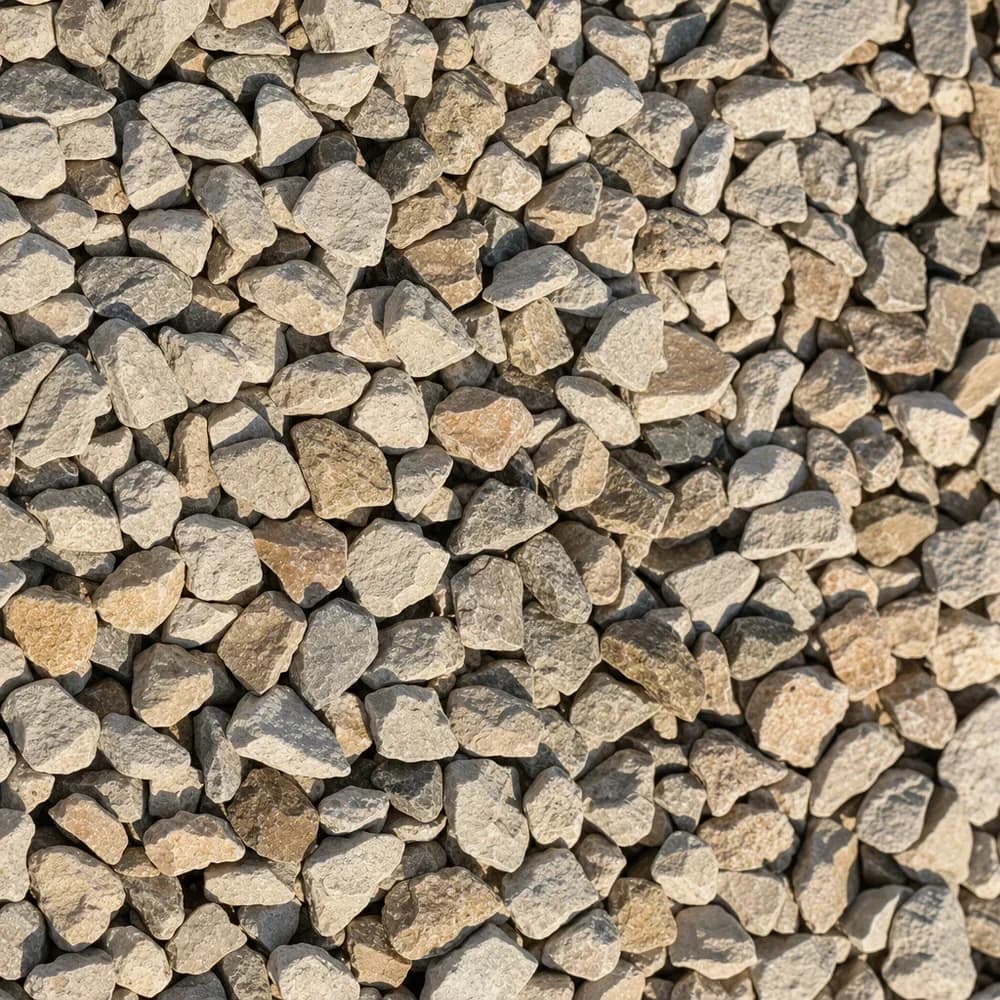
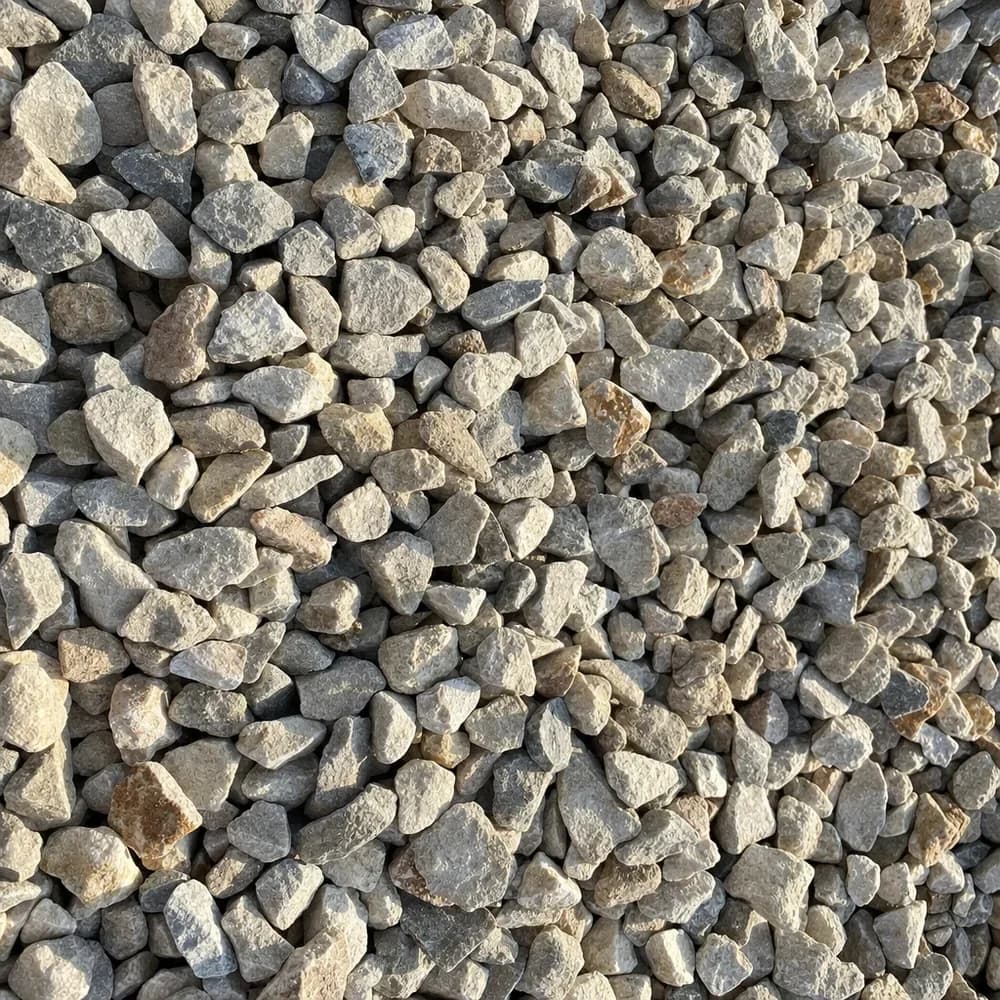
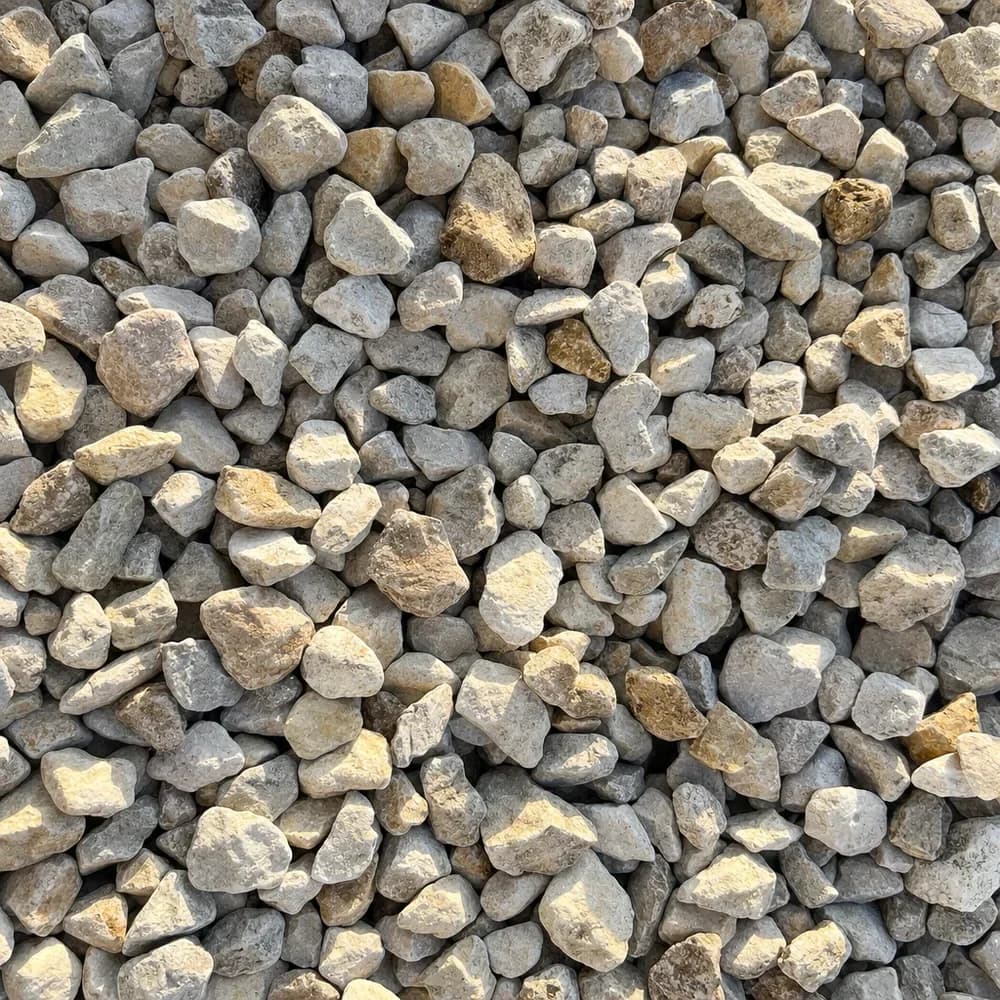
#10 Stone Screenings for Paver and Flagstone Beds in Indiana
After Indiana winter weather, Stone Screenings help create an even setting layer for pavers and flagstone on a properly prepared base.
- Size: 1/4 inch minus
- Grading: Stone dust and fine particles
- Type: Angular crushed stone
From $462 for 1 ton, delivery included (larger loads cost significantly less per ton)
Free delivery included
Free delivery anywhere in Indiana
Pick a delivery date
Weekday delivery, earliest Oct 30
“Ordered stone screenings from the team and the free delivery was a nice bonus. The driver was friendly and careful about where he placed it, really happy with the whole thing.”
Mark V. · Verified Buyer
Get a Free Quote
Fill out the form and our sales team will get back to you within the hour.
Size and Grading
- Size
- 1/4 inch minus
- Grading
- Stone dust and fine particles
- Type
- Angular crushed stone
Nearly every load of stone screenings that goes out onto the central till plain ends up under something that has to finish flat: a paver patio behind a house in a newer subdivision, a flagstone walk to a side door, a pad for a shed that will not sit level on its own. The ground here is dense glacial clay on a plain with almost no fall to it, and the fine material that makes a level bed is also the material that has to be kept out of the way of water. Both things are true at once, which is why the layer below matters as much as the bed itself.
| Spec | Figure |
|---|---|
| Size | 1/4 inch minus |
| Grading | Stone dust and fine particles |
| Type | Angular crushed stone |
The problem stone screenings solve that sand and gravel cannot
A paver or a flagstone slab needs two things from what it sits on: an exactly even plane, and something that will not move once the unit is set. Coarse stone will not screed to a plane, because the pieces are bigger than the tolerance you are working to. A rounded sand screeds beautifully and then washes out of the joints, because rounded grains have nothing to grip.
Screenings are the angular middle ground. The particles are fine enough to rake and screed to a true surface, and angular enough that when you wet and compact them they knit into a layer that holds the shape you gave it. The same fines pack into the joints between flagstones and hold the units against each other rather than leaving open gaps for weeds. Around here they get called limestone screenings as often as anything else, and the two names describe the same material.
The other job they do quietly is correction. A base that is half an inch out across a patio is a nuisance for every other material and a ten-minute fix with screenings raked to depth.
What slow-draining till does to a fine layer, and how to work around it
Central Indiana sits on a flat plain of dense glacial till, loamy clay that drains slowly, and so much farm ground here runs on tile precisely because water has no easy outlet. That is the context a screenings bed lands in. The material is deliberately tight, so water does not pass through it quickly. Put one straight on clay and you have built a shallow bathtub under your patio, and then the winter does the rest: repeated freeze and thaw lifts and drops a saturated layer, and the pavers ride up with it.
The sequence that survives that is not complicated.
- A compacted layer of #53 stone underneath, four inches or more, doing the structural work and giving water somewhere to move sideways.
- Fall built into that base, away from the house, so the water moving sideways is going somewhere.
- The screenings as a thin setting bed on top, not as a base and not as a way to correct a base that is out of level.
Work in the season the ground allows. Saturated clay in March will not compact and will not hold a grade, and frozen ground will not compact at all. Late spring through fall is when a bed like this gets built properly on this ground.
Wetting, screeding and tamping before anything gets set on it
Spread the screenings over the compacted base at the depth you want and strike them off with a screed board running on rails or pipe so the plane is true rather than eyeballed. Damp the layer before you compact it. Dry fines bridge and then collapse later; a little moisture lets them close up under the plate.
For pavers, the usual method is to compact the base hard, screed the bedding layer, set the units without walking the screeded surface, and then run the plate over the finished paving with a pad on it to seat everything together. For flagstone with irregular thickness, bed each piece individually and tap it down until it stops rocking, which is where a fine angular material earns its money.
Sweep screenings into the joints at the end, water them in, and repeat once they have settled. Expect to top the joints twice in the first season.
Keeping a packed surface tight through a central Indiana winter
A compacted screenings surface is closer to a soft pavement than a gravel one, and it fails the way pavements fail: at the edges and wherever water sits. Keep an edge restraint, a timber or a row of set stone along every open side, because the first thing to go is material shuffling off the boundary. Keep roof water and downspout discharge off the surface entirely, since concentrated flow will cut a channel through fines faster than anything else will.
Each spring, look for low spots that hold water after a storm, break the surface with a rake, add material, wet and tamp it back. A path that is patched while it is still a shallow dip stays flat for years. One left until it holds water after every rain will need lifting and rebuilding.
Tons for a single-car drive, a flagstone walk and the paths between raised beds
Hypothetical layouts, worked here so the arithmetic is visible. Length times width times depth, all in feet, divided by 27, gives cubic yards. The site publishes a figure of about 2,900 lb per cubic yard for screenings and stone dust, roughly 1.45 tons per cubic yard, so the tonnages are approximate.
A single-car gravel drive topped with a packed surface, 55 feet by 10 feet at 2 inches. 55 x 10 = 550 square feet. Two inches is 0.1667 feet, so 550 x 0.1667 = 91.7 cubic feet. 91.7 divided by 27 = 3.4 cubic yards, about 4.9 tons.
A flagstone walk, 38 feet by 3 feet, bedded 1.5 inches deep. 38 x 3 = 114 square feet. One and a half inches is 0.125 feet, so 114 x 0.125 = 14.25 cubic feet. That is 0.53 cubic yards, roughly three quarters of a ton. Bedding work uses far less than people expect, which is the usual surprise on a first order.
Two walking strips between raised vegetable beds, each 20 feet by 3 feet at 3 inches. 20 x 3 = 60 square feet each, 120 square feet together. Three inches is 0.25 feet, so 120 x 0.25 = 30 cubic feet. 30 divided by 27 = 1.1 cubic yards, about 1.6 tons.
Run your own figures through the stone calculator, which takes length and width in feet, depth in inches, up to five separate areas or a circle, and a 5 percent margin it adds by default, which you can untick. If you are pricing the base as well, the paver base calculator handles that layer.
Pick a date and a quantity on this page to order, with delivery set from your ZIP at checkout. Fine material arrives as a heap that will not spread itself, so have a wheelbarrow run and a screed board ready before the truck comes, and a tarp if rain is due.
Quickly Calculate How Much You Need
Material: #10 Stone Screenings
How to Measure
Measure the length and width of your project area in feet
Decide on depth in inches (2" for landscaping, 4" for driveways)
Enter the values above and we'll calculate the tonnage you need
Need help figuring out the right amount? We can help!
Call or text us at (812) 721-8126 and we'll help you calculate the right quantity for your project.
Not sure how much you need? The Stone Calculator has depth guides, coverage charts and worked examples for this material.
Frequently Asked Questions About #10 Stone Screenings
Customer Reviews
Grabbed stone screenings from these guys and delivery showed up on the day they promised, super happy with the whole thing.
Greg I. · Indianapolis, IN · Verified Buyer
Picked up stone screenings from the team and they kept me updated the whole time, super easy and I'm really happy with it.
Michelle T. · Evansville, IN · Verified Buyer
Ordered stone screenings from the team and the free delivery was a nice bonus. The driver was friendly and careful about where he placed it, really happy with the whole thing.
Mark V. · Indianapolis, IN · Verified Buyer
Ordered stone screenings from them and it was solid material. Driver was friendly and careful about where he placed it, really happy with the whole thing.
Greg K. · Fort Wayne, IN · Verified Buyer
#10 Stone Screenings has 4 verified customer reviews with an average rating of 5 out of 5.
#10 Stone Screenings delivery across Indiana
- Indianapolis
- Fort Wayne
- Evansville
- Fishers
- South Bend
- Carmel
- Bloomington
- Hammond
- Noblesville
- Lafayette
- Greenwood
- Gary