Railroad Ballast for Indiana Farm Yards and Equipment Pads
On Indiana farm lanes and pole barn pads, Railroad Ballast provides a draining stone foundation for ground that can stay wet through winter.
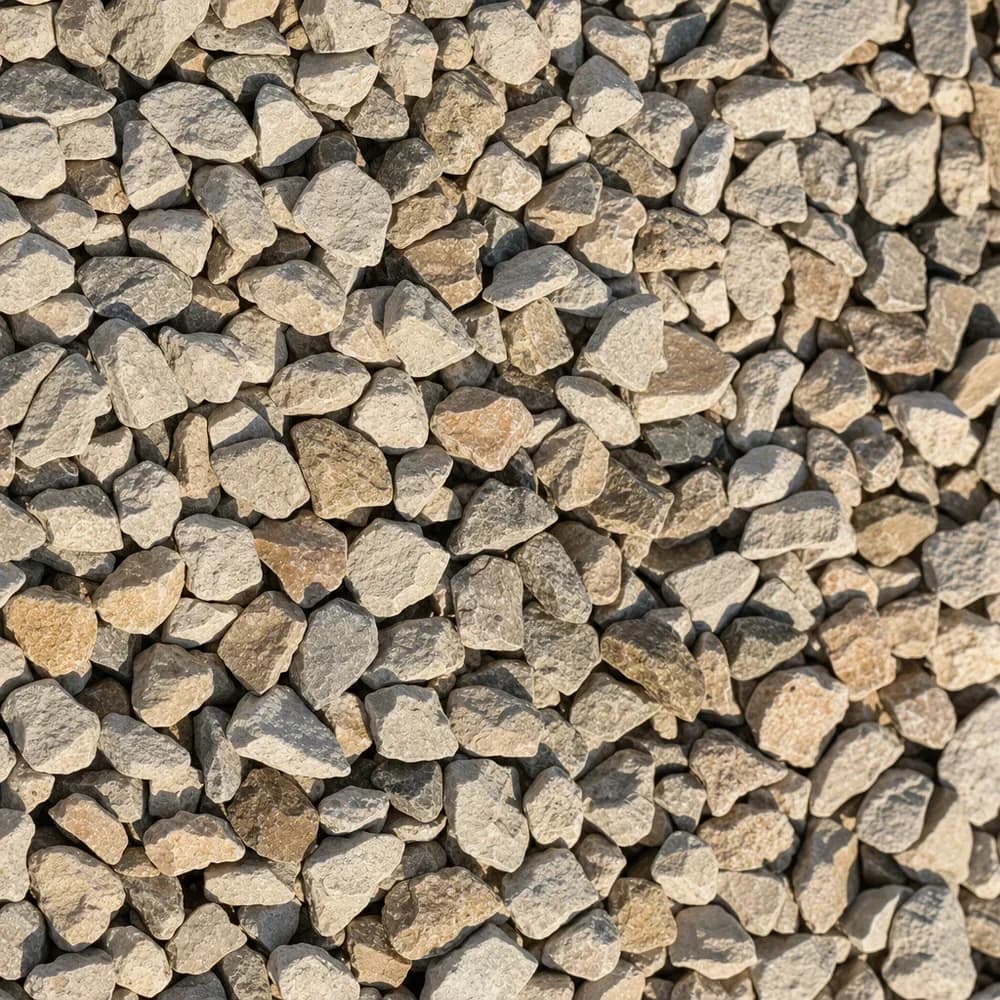
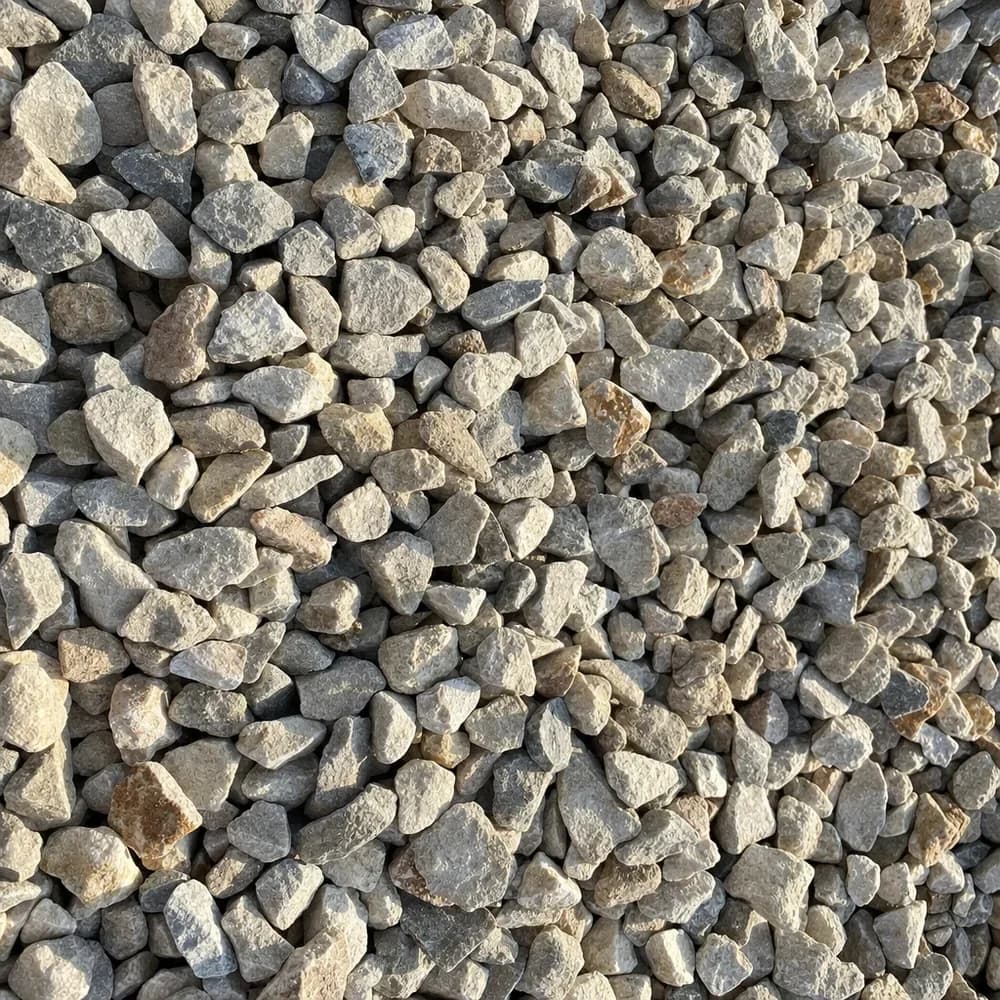
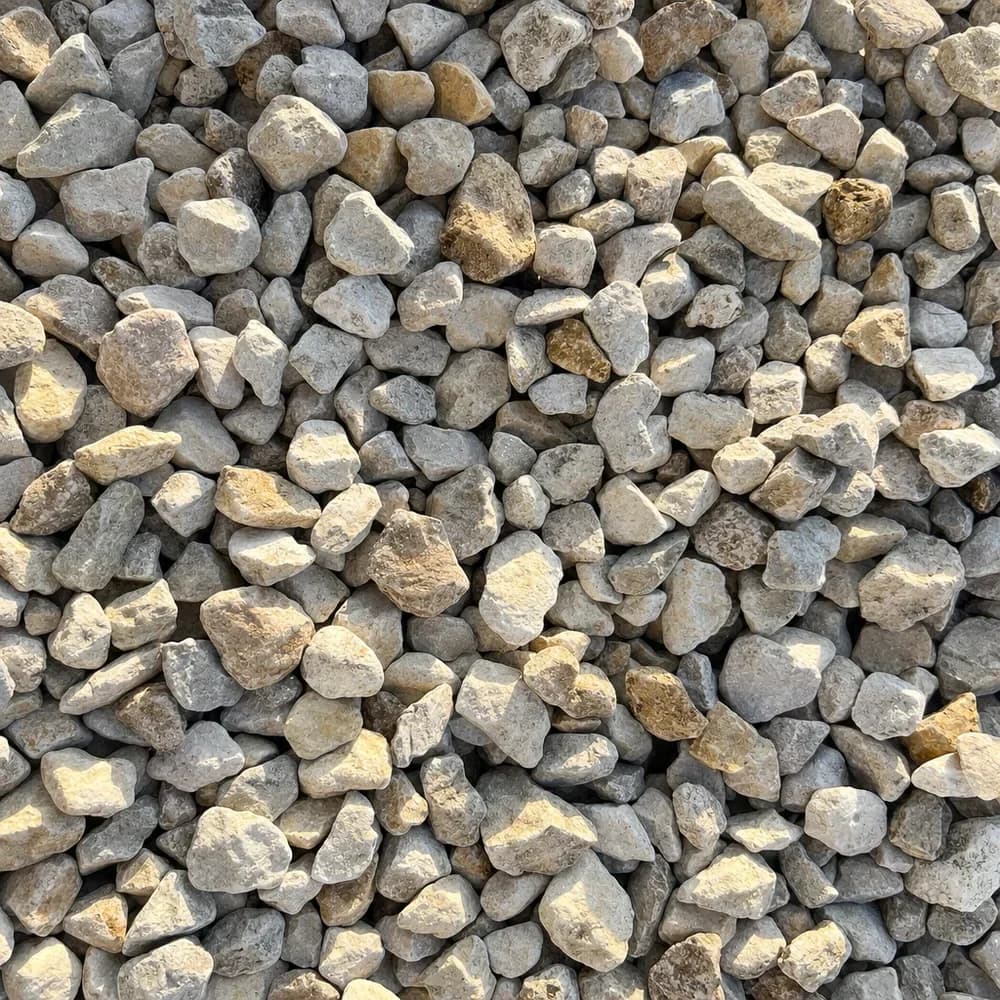
- Size: Roughly 1 inch to 2.5 inches
- Grading: Graded to interlock under load while draining freely
- Type: Large angular crushed stone
From $436 for 1 ton, delivery included (larger loads cost significantly less per ton)
Free delivery included
Free delivery anywhere in Indiana
Pick a delivery date
Weekday delivery, earliest Oct 30
“Decided on railroad ballast from this company and I'm really happy with how it turned out. Pricing was fair, the free delivery was a nice bonus, and the whole order felt like good value.”
Christine C. · Verified Buyer
Get a Free Quote
Fill out the form and our sales team will get back to you within the hour.
Size and Grading
- Size
- Roughly 1 inch to 2.5 inches
- Grading
- Graded to interlock under load while draining freely
- Type
- Large angular crushed stone
Most loads of this stone are bought to end an argument that has been running for years: a gate approach, a feeding area or a corner of a machinery yard that has eaten three loads of ordinary stone and still turns to soup every spring. The mistake underneath that pattern is not the choice of stone. It is putting a material that wants to compact onto ground that will not support compaction, so each load presses into the clay and vanishes. Railroad ballast changes the approach entirely. It does not try to seal the surface. It bridges.
| Spec | Figure |
|---|---|
| Size | Roughly 1 inch to 2.5 inches |
| Grading | Graded to interlock under load while draining freely |
| Type | Large angular crushed stone |
Reasons to put railroad ballast under a tile-drained yard
- The ground stays wet below the surface for long stretches and the problem returns every year in the same spot, which on the flat till plain usually means water with no outlet rather than a shortage of stone.
- The traffic is heavy and slow: loaded grain trucks, a tractor with a full spreader, a skid steer turning in the same place a hundred times a week.
- You need the layer to carry weight and pass water at the same time, rather than choosing between the two.
- There is room in the build for a separate surface on top, because this layer is not the finish.
- The area is big enough and rough enough that a coarse material will not be an inconvenience underfoot.
Three situations where it will let you down
A surface people walk on. The pieces run up to two and a half inches, they are angular, and they roll. No amount of rolling turns that into a walking surface. Where the yard doubles as somewhere people stand, plan a finer layer on top from the start.
A thin repair. A coarse stone needs depth to interlock and to arch across soft ground. Two inches of it scattered over a rut is loose rock on mud, and by March it will have worked its way into the clay. If the depth is not there in the plan, a dense graded material is the better order.
A drainage problem with no outlet. This is the big one on flat ground. Late winter and spring rain on naturally poorly drained till has nowhere to go, which is exactly why so much farmland here runs on tile. An open stone layer buried in that ground does not create an outlet; it creates a cistern that holds water against the underside of your yard all winter. Sort the fall, the ditch or the tile connection first. The stone comes second.
Feeding pads, machinery yards and lanes on old lake plain clay
Across the central plain and out toward the heavier clay of the northeast and the old lake plain east of Fort Wayne, the subgrade is dense and slow. Repeated freeze and thaw heaves and ruts a gravel surface through the winter, then the spring melt softens the clay beneath it before the ground has had a chance to dry.
That gives the material three clear roles here.
Under a pole barn or equipment pad. It is the lower course that spreads the load of whatever is parked on it out across ground that could not take that load directly, while letting water that gets in escape sideways rather than sitting under the slab.
A hard standing or feeding area that has to drain. Open stone means water moves through rather than standing, which is the difference between a pad that is usable after a storm and one that is not.
A worksite road or heavy lane. Coarse angular pieces lock together under truck and equipment traffic and stay where they were put, which is what a finer stone stops doing once the surface gets churned.
It also does what its name says: it is a track foundation where it keeps ties in line and lets moisture leave the section.
Why the layer above it decides whether the yard works
This part is easy to miss. A ballast layer is a foundation, and foundations are not finishes. Left bare it drains superbly, carries weight, and is unpleasant to walk on, hard to sweep and almost impossible to grade smooth.
So the build is almost always two layers. Ballast below, doing the structural and drainage work, and a compacted dense graded stone above it as the running surface. On this ground that upper layer is usually #53 stone, compacted in lifts so the fines lock. Where the upper layer wants to be tighter and smoother, #73 stone is the finer dense graded option.
Separate the two layers from the soil below with geotextile if the subgrade is soft. Without it, wet clay pumps up into the voids under traffic and the open structure you paid for closes within a season or two.
Build between late spring and fall. Saturated clay will not compact and frozen ground will not compact at all, so a yard rebuilt in February gets rebuilt again.
Tons for a dry creek bed, a fire pit ring and a barn pad
Hypothetical layouts, worked out here. Length times width times depth, all in feet, divided by 27, gives cubic yards. The site publishes about 2,900 lb per cubic yard for this family of stone, roughly 1.45 tons per cubic yard, so these figures are approximate.
A dry creek channel taking roof and yard runoff, 45 feet long with an average width of 5 feet, at 8 inches. 45 x 5 = 225 square feet. Eight inches is 0.667 feet, so 225 x 0.667 = 150 cubic feet. 150 divided by 27 = 5.6 cubic yards, about 8.1 tons. Coarse angular stone stays put in a channel that actually moves water, though for a channel that is mostly there to be looked at, river rock is the material people choose.
A ring around a fire pit, 18 feet across with a 6 foot pit in the middle, at 4 inches. The outer circle is 3.14 x 9 x 9 = 254.3 square feet, the pit is 3.14 x 3 x 3 = 28.3 square feet, leaving 226.0 square feet of ring. Four inches is 0.333 feet, so 226.0 x 0.333 = 75.3 cubic feet. 75.3 divided by 27 = 2.8 cubic yards, roughly 4.0 tons. As a non-combustible layer under a seating area this works; as the surface chairs stand on it does not, so most people put 3/8" natural pea gravel over the top.
A pole barn equipment pad, 40 feet by 60 feet at 6 inches. 40 x 60 = 2,400 square feet. Six inches is 0.5 feet, so 2,400 x 0.5 = 1,200 cubic feet. 1,200 divided by 27 = 44.4 cubic yards, about 64.4 tons. That is the lower course only; the dense graded layer above it is a separate quantity.
Put your own measurements into the stone calculator, which takes feet for length and width, inches for depth, a circle or up to five separate areas, and a 5 percent margin it adds by default, which you can untick.
To order, choose a delivery date and then a quantity on this page, with delivery arranged from your ZIP code at checkout. Stage the load on firm ground you know will hold a loaded truck, not on the soft area you are fixing, and leave clear sky over the dump spot for the bed to lift. Depth questions for a particular yard are easier to answer with measurements, so send those through the contact page before booking.
Quickly Calculate How Much You Need
Material: Railroad Ballast
How to Measure
Measure the length and width of your project area in feet
Decide on depth in inches (2" for landscaping, 4" for driveways)
Enter the values above and we'll calculate the tonnage you need
Need help figuring out the right amount? We can help!
Call or text us at (812) 721-8126 and we'll help you calculate the right quantity for your project.
Not sure how much you need? The Stone Calculator has depth guides, coverage charts and worked examples for this material.
Frequently Asked Questions About Railroad Ballast
Customer Reviews
Needed railroad ballast and this company made the whole order easy, kept me updated, and showed up when they said they would. Really happy with how it went and I'd definitely order again and recommend them.
Ryan D. · Evansville, IN · Verified Buyer
Decided on railroad ballast from the team, and ordering was painless from start to finish.
Luis M. · Fishers, IN · Verified Buyer
Got railroad ballast from these guys and they kept me updated the whole time. Fair pricing too, definitely felt like a good value.
Brian S. · Fort Wayne, IN · Verified Buyer
Decided on railroad ballast from this company and I'm really happy with how it turned out. Pricing was fair, the free delivery was a nice bonus, and the whole order felt like good value.
Christine C. · Evansville, IN · Verified Buyer
Had railroad ballast delivered from Indiana Rock Supply, and it showed up on the day they promised, really happy with the whole thing.
Wendy C. · Carmel, IN · Verified Buyer
Railroad Ballast has 5 verified customer reviews with an average rating of 4.8 out of 5.
Railroad Ballast delivery across Indiana
- Indianapolis
- Fort Wayne
- Evansville
- Fishers
- South Bend
- Carmel
- Bloomington
- Hammond
- Noblesville
- Lafayette
- Greenwood
- Gary