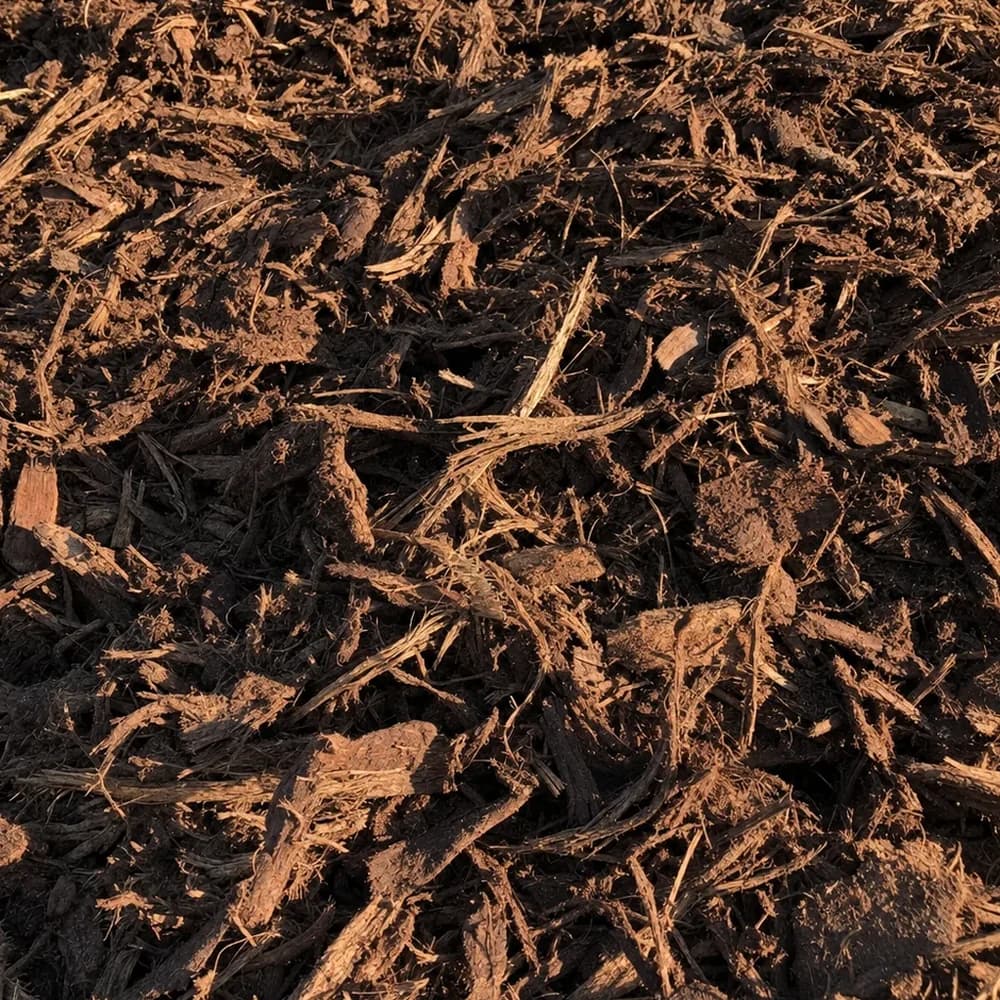
Mulch Calculator for Indiana Beds, Tree Rings and Borders
Enter your project dimensions
Bed work here waits on the ground, not the calendar. Clay stays cold and heavy well past the first warm weekend, and mulch spread over a soaked bed seals the wet in rather than keeping the heat out. Most yards get two decent windows: late spring once the soil has dried and warmed, and early fall before the leaves come down. Measure in the first week of either, because a mulch calculator answers in minutes and a bed that sits bare through July grows weeds instead.
Mulch Depths for a Spring That Starts Late on Cold Clay
| The bed | Depth to enter |
|---|---|
| Topping up last year's mulch, raked loose first | 2 in |
| A bare or newly planted bed | 3 in |
| A tree ring, kept clear of the trunk | 3 in |
| A slope that washes in a hard rain | 3 in of shredded, which knits together |
| Anywhere at all | never more than 4 in |
Depth is where mulch differs from every other material in this set. With stone, more depth buys strength. Here it buys trouble: past 4 inches the layer stays wet, keeps air off the roots, and turns sour in the middle. Pile it against a trunk and the bark rots. Leave a bare ring 3 to 6 inches out from the trunk and keep the surface flat rather than mounded.
Adding Four Beds, a Row of Rings and a Bare Slope in One Pass
Mulch is the material most likely to arrive as half a dozen separate shapes, which is what the multiple areas mode is for.
- Choose rectangle, circle or multiple areas. Multiple areas takes up to five pieces and totals them.
- Enter lengths and widths in feet, or a diameter in feet for a ring.
- Enter the depth in inches, anywhere from 0.25 to 24.
- Choose the material.
- Tick the 5% box for compaction and spillage if the load is being wheelbarrowed any distance, since spillage is the real cost on a long run to the back fence.
- Read cubic yards, tons and cubic feet, and email the figures to yourself.
Six rings will not fit in five slots. Size one ring, note the cubic feet, and multiply. A 5 ft ring at 3 inches is about 4.9 cubic feet, so six of them come to 29.4 cubic feet, just over a cubic yard.
Cubic Yards for a Foundation Border, Six Rings and a Bare Slope
Sample beds with sample dimensions, not a customer's yard.
The foundation border. 48 ft by 3.5 ft is 168 sq ft, bare, at 3 in:
- 168 x 3 / 12 = 42 cubic feet
- 42 / 27 = 1.56 cubic yards
Six tree rings. 5 ft across each, at 3 in: one ring is 3.14 x 2.5 x 2.5 = 19.6 sq ft, so six are 117.8 sq ft:
- 117.8 x 3 / 12 = 29.4 cubic feet
- 29.4 / 27 = 1.09 cubic yards
The bare slope. 30 ft by 8 ft is 240 sq ft, at 3 in:
- 240 x 3 / 12 = 60 cubic feet
- 60 / 27 = 2.22 cubic yards
Together that is 4.87 cubic yards, so five yards covers it with a little to spare. Reckon on 30 to 45 minutes of wheelbarrow work per yard, and start at the far end of the property while your back is fresh.
Six Hundred Pounds a Yard, and the Tons Box That Barely Moves
| Material | Weight per cubic yard | Tons per yard |
|---|---|---|
| Shredded mulch | approx 600 lb | 0.30 |
| Screened topsoil, for scale | approx 2,200 lb | 1.10 |
| Dense graded stone, for scale | approx 3,000 lb | 1.50 |
Five yards of mulch weighs about 1.5 tons. Five yards of stone weighs 7.5. That gap is why mulch is bought by the yard and why the ton figure on the result panel is worth a glance and nothing more. The one place weight matters is the pile itself: light material spreads fast, but it also blows, floats and stains fresh concrete, so lay a tarp before the load is tipped.
Two conversions are worth keeping. A cubic yard is 27 cubic feet, which equals 13.5 of the 2 cubic foot bags sold at garden centers. And at 3 inches deep, one yard covers 108 square feet, or 162 square feet at 2 inches.
The Half Yard Held Back, and the Beds You Always Forget
Order a touch over rather than a touch under. Coming up short means the bed by the back door stays bare until another trip, while a leftover half yard gets used within the week on the strip behind the garage that nobody measures. Two habits make the spare worth having:
- Cover what is left with a tarp and spread it within two weeks. A pile left standing a month heats in the middle and sours.
- Keep the last wheelbarrow for the ring that settles first, usually whichever one takes the roof runoff.
A bed that washes out every spring may want river rock over fabric instead, which is sized on its own weight. Where the bed itself needs building up before any mulch goes on it, that is a different material and a different tool. Garden soil for raised beds and planting areas is sized with the soil calculator, and a new lawn edge is sized with the topsoil calculator. Mulch is a surface layer. It is not what you fill a bed with.
Take the yardage to the product page, set the quantity and choose a date there, or open the full set of calculators if the job turns out to need more than mulch. Delivery is arranged at checkout by ZIP code, and the truck needs a clear spot to tip where the pile will not sit on the lawn for a week.
Common questions
The tons figure says 1.5. Do I order on that or on the cubic yards?
On the cubic yards. Bulk mulch moves by volume because it weighs so little for its size, and the tonnage on the result panel only tells you what is going onto the drive. The yardage is the number the product page asks for.
Should the 3 inches be measured fluffed up or after it settles?
Enter the finished depth you want to see once it has been raked level and rained on, which is roughly what a fresh load settles to within a couple of weeks. There is no compaction to allow for here, so the 5% box is doing nothing but covering spillage on the wheelbarrow run.
How do I get a tree ring into the tool without measuring the whole bed?
Switch to circle and measure straight across the ring, trunk included, for the diameter. A 5 ft ring at 3 inches is 4.9 cubic feet, so it takes six of them to use a cubic yard. Rings are almost always a smaller job than they look from the kitchen window.
Is there a quick way to check the answer against bags?
Divide the cubic feet by 2 and you have the count of 2 cubic foot bags, or by 27 for cubic yards. Two hundred square feet at 3 inches is 50 cubic feet, which is 25 bags or 1.85 yards, and that arithmetic is the fastest sanity check on any figure the tool returns.
Why does a yard of mulch and a yard of soil give such different tons?
The volume is identical and the cubic yard figure proves it. Weight is the only thing that changes, and shredded mulch is published here at about 600 lb a yard against 2,200 lb for screened topsoil, so the same cube comes back at roughly a quarter of the tonnage.
Related calculators
Skip the 27-bag cart.
Bulk shredded hardwood by the yard, tipped in your driveway, delivery free.