Topsoil Calculator for an Indiana Lawn, Planning to Spreading
Enter your project dimensions
The decision that sets the size of a topsoil order is the depth, and it is made before anyone measures anything. Take 2,600 sq ft of bare ground behind a new outbuilding. As a seedbed at 4 in it wants about 32 cubic yards. As a half inch topdressing over grass that is already there, the same ground wants about 4. Square footage barely moved; the order moved eightfold. So the topsoil calculator comes into this job partway through, after the depth is settled, and the stages below follow one hypothetical lawn from that decision to the last wheelbarrow load.
Settling on Four Inches Before the Tape Comes Out
| What you are doing | Depth |
|---|---|
| Topdressing an established lawn | 1/4 to 1/2 in |
| Leveling before overseeding | 1/2 to 1 in |
| New lawn from seed or sod | 4 to 6 in |
| A new flower bed, blended into what is there | 6 in |
| Filling a vegetable bed | 12 in, and use a blend instead |
Two of those rows send you elsewhere. A vegetable bed at a foot deep wants garden soil rather than plain screened topsoil, so size it on the soil calculator. And if the ground has to come up more than the growing layer, the lift underneath is fill, not topsoil: bring the grade to within 4 to 6 in of finished level with fill dirt sized on the dirt calculator, then spend the topsoil budget on the top where roots will actually be.
Loosening Clay Subgrade So the New Layer Can Drain
Four inches of good soil placed on a smooth, sealed clay pan will hold water rather than drain it, and on a flat site there is nowhere for that water to go. Before anything is ordered:
- Scratch the subgrade up at least an inch so the two layers knit together instead of meeting as a boundary roots refuse to cross.
- Set the fall away from the building, around 6 in of drop across the first 10 ft.
- Pick the season. Saturated clay smears under a wheel and frozen ground will not take a rake, so this work runs best from late spring through fall.
Feeding 2,600 Square Feet Into the Topsoil Calculator
- Choose rectangle, circle or multiple areas. Multiple areas holds five pieces and totals them.
- Enter length and width in feet, or a diameter in feet for a round area.
- Enter the depth in inches, from 0.25 to 24. A quarter inch topdressing and a 6 in seedbed both fit.
- Choose the material so the weight is worked out on topsoil rather than on a blend or on fill.
- Tick the 5% box for spillage and settling.
- Press calculate and read cubic yards, tons and cubic feet, then use email my quote to keep the figures.
The lawn itself, worked through as an example rather than a real project:
- 2,600 sq ft at 4 in
- 2,600 x 4 / 12 = 866.7 cubic feet
- 866.7 / 27 = 32.1 cubic yards
- 32.1 x 1.10 = 35.3 tons
- With the 5% box ticked: 33.7 cubic yards, 37.1 tons
Adding the Topdressing Strip as a Second Area
Most yards have a second job waiting. Say the established lawn out front, 3,400 sq ft, is ready for a half inch topdressing in the same week:
- 3,400 x 0.5 / 12 = 141.7 cubic feet
- 141.7 / 27 = 5.25 cubic yards
- 5.25 x 1.10 = 5.8 tons
Entered as a second area, that comes through as one total of just over 37 cubic yards before the allowance, or about 39 with the box ticked. Keep the topdressing thin enough that the grass tips stay in daylight. Anything more than a half inch over living turf smothers it, and where the grade needs to come up by more than an inch the turf comes off or gets killed first.
Looking Over the Load Before It Comes Off the Truck
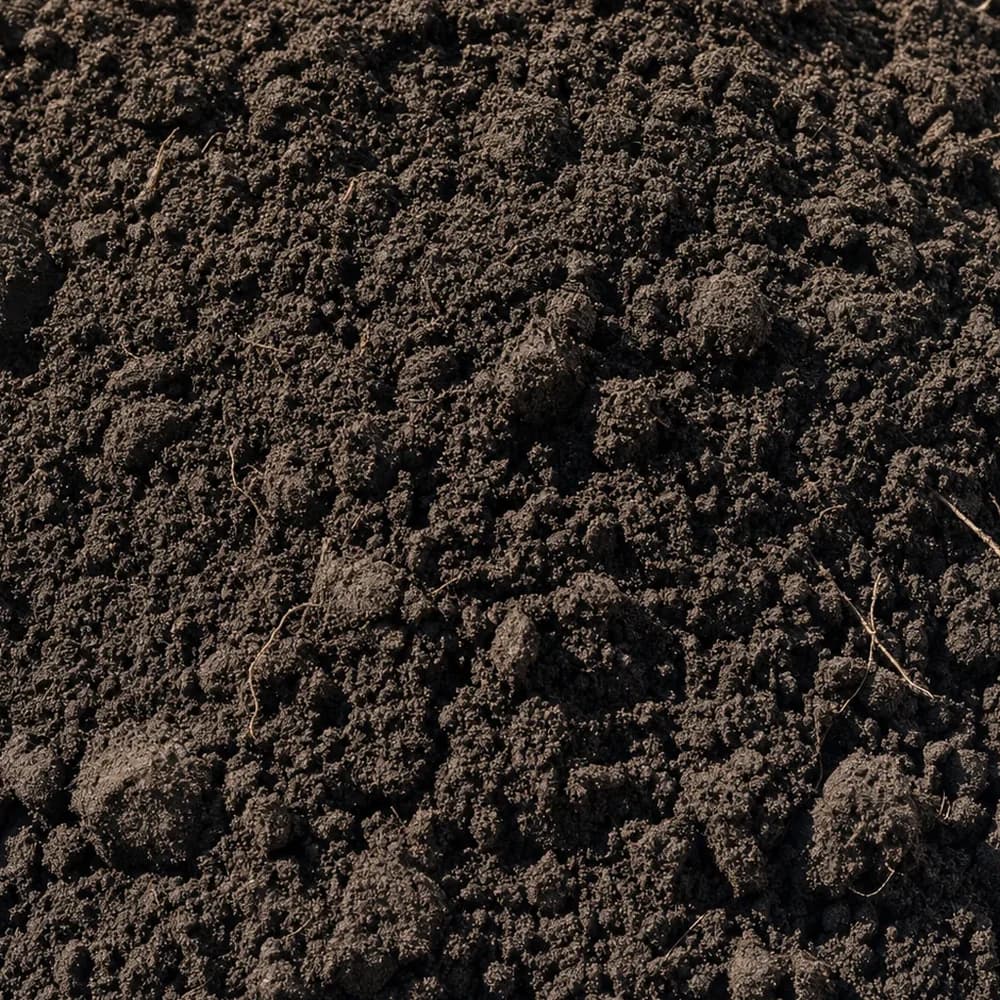
Screened topsoil should look dark and feel crumbly, and it should smell like a woodlot floor rather than a ditch. Squeeze a damp handful: it ought to hold a loose ball that falls apart when poked. If it ribbons out smooth between your fingers it is clay heavy; if it will not hold together at all it is mostly sand. Gray material or a sour smell means it sat wet without air, and visible white rhizomes mean weeds are arriving with it. If a load looks wrong, photograph it and get in touch through the contact page before it gets spread.
Timing the Load for the Week You Can Spread It
Have it arrive in the week you plan to work, not a month ahead. A pile that sits through a wet spell weighs about a third more per shovel and smears instead of raking out. Delivery is arranged at checkout by ZIP code and the truck needs firm footing with room to tip, which on soft spring ground means the drive rather than the middle of the yard. Spread it, then pack it lightly rather than hard: in properly settled topsoil a footprint should sink about half an inch.
Reading Tons on a Material Sold by the Yard
Topsoil is sold by the cubic yard, so the yardage is the order. The tons are there for the practical side: what is landing on the drive, and how many wheelbarrow loads stand between the pile and the far corner. This site publishes screened topsoil at about 2,200 lb per cubic yard, which the tool reads as 1.10 tons, against 2,000 lb for a garden blend and 2,400 for fill dirt.
Coverage per cubic yard is the fastest sense check there is: 648 sq ft as a half inch topdressing, 162 sq ft at 2 in, 81 sq ft at 4 in and 54 sq ft at 6 in. Put another way, every 100 sq ft of new lawn takes between 1.25 and 1.85 yards depending on whether you settled on 4 in or 6. When the yardage looks right, open Top Soil, set the quantity and choose a date.
Common questions
How do I check the yardage on paper before ordering?
Square feet times the depth in inches, divided by 12, gives cubic feet. Divide that by 27 for cubic yards. A quick check against the coverage figures catches most slips: if the answer for 4 in of soil is not close to one yard per 81 sq ft, something has gone in as inches where it should have been feet.
Why does 4 inches of topsoil weigh less than 4 inches of fill over the same lawn?
The volume is identical and the cubic yards say so. Weight is the only thing that changes with the material, and this site publishes topsoil at 2,200 lb a yard against 2,400 for fill dirt, so a grade lift in fill lands heavier than the growing layer that covers it.
The seedbed has been raked up rough. Does the 5 percent cover that?
It covers spillage and the modest settling you get once the soil is watered and walked on. A seedbed left deliberately rough will swallow a little more than a smooth one, so on a large lawn order to the next whole yard as well as ticking the box, and keep the surplus for the low corners that show up after the first rain.
The yard drops away toward the ditch. Do I measure down the slope?
Measure the area as it would look from directly overhead, not along the face of the fall. Depth is where a slope costs you: soil creeps downhill as it is raked, so the depth at the top of the run tends to end up short unless you average generously.
The lawn wraps around the drive in an L. Can it go in as one calculation?
Yes. Cut the L into two rectangles at the inside corner and enter each as its own area, up to five in one pass. Splitting it also lets you put 4 in on the open lawn and a deeper entry on the strip beside the drive, where the ground is usually the most compacted.
Related calculators
Lawn math done? Soil's on us to deliver.
Screened topsoil by the cubic yard, free delivery across Indiana.