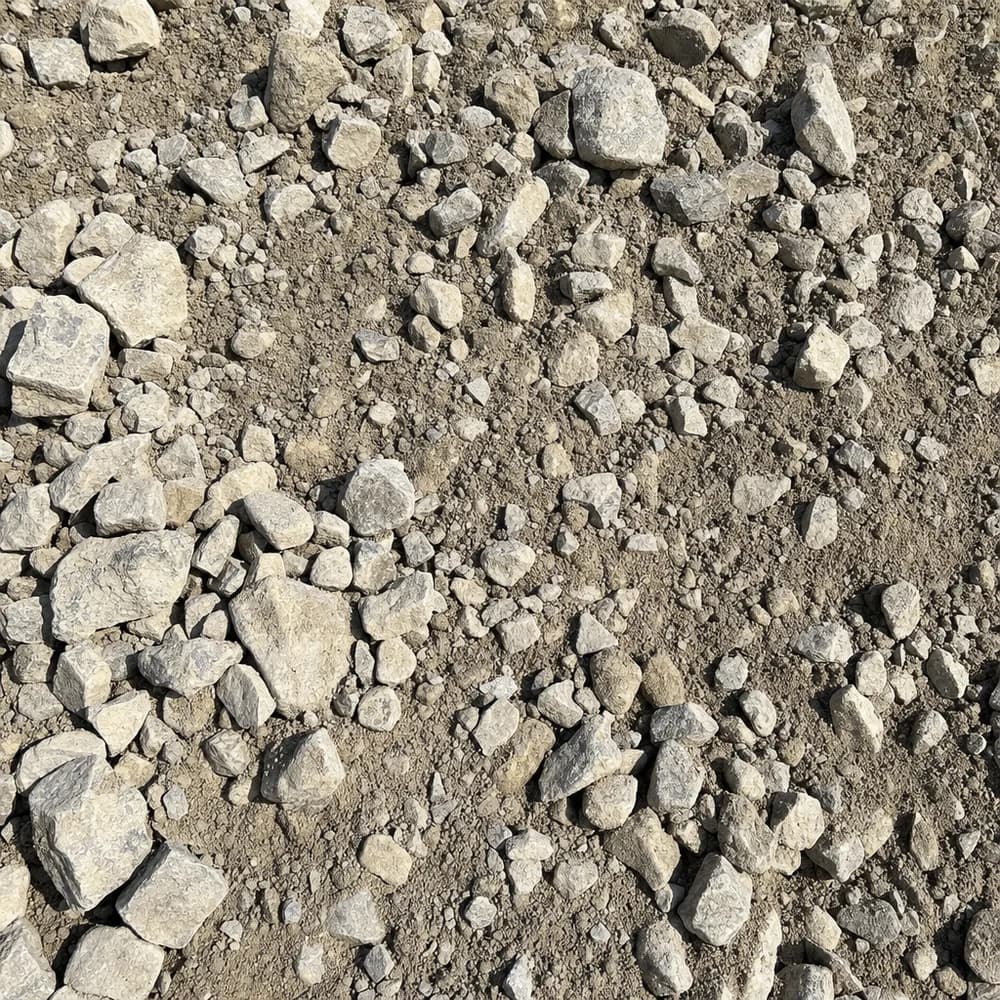
Road Base Calculator for Indiana Lanes, Pads and Shed Floors
Enter your project dimensions
Standing at the end of a farm lane with a tape in your hand, the awkward part shows up before the first measurement: the lane is not a rectangle. It flares where a truck swings in off the county road, it pinches between the bins, and the soft stretch that ponds every March has already swallowed more stone than the whole rest of the run. The road base calculator understands straight sides and circles, nothing else, so the work in front of you is breaking what you can see into two or three pieces it can add together.
Pacing a Lane That Flares at the Road and Pinches at the Bins
Take the measurements in this order and the rest of the page goes quickly.
- Walk the centerline for length. On a curve the outside edge reads long and the inside edge reads short, and the middle is the honest number.
- Take the width in three or four places and average them. A lane that runs 10 ft down the straight and 13 ft between the gateposts averages closer to 11.
- Measure the flare at the road entrance separately. It is usually a short, wide rectangle, and it holds a surprising share of the stone.
- Note the low stretch but do not widen it. Soft ground takes depth, not extra width.
- Write a depth in inches beside every piece before you touch the tool.
Pads are easier. A shed floor or an equipment strip is length times width, measured to where you want the stone to stop, which is usually a foot past the wall line so the edge does not crumble under a tire.
What the Road Base Calculator Wants: Feet Across, Inches Down
- Choose rectangle, circle or multiple areas. Multiple areas holds five pieces and totals them, so the straight run, the flare and the turn-in go in as one job.
- Enter length and width in feet, or a diameter in feet for a round pad or turnaround.
- Enter the depth in inches. The box accepts anything from 0.25 to 24, which covers every base layer on this list.
- Choose the material so the tonnage is worked out on the right weight.
- The box that adds 10% extra for compaction and spillage is ticked when the page loads. On stone that gets rolled or driven, leave it ticked.
- Press calculate and read cubic yards, tons and cubic feet. Email my quote sends the same figures to your inbox, so they are still there when the tape is back in the toolbox.
Four Inches for the Car, Eight for the Tractor, Twelve Over Soft Clay
| What runs on it | Compacted depth |
|---|---|
| Light traffic on firm, well-drained ground | 4 in |
| Everyday vehicles and delivery trucks | 6 in |
| Equipment parked on it, or wet and rutted subgrade | 8 to 12 in |
Four things decide whether that depth holds up on a till plain:
- Strip the sod and topsoil first. Organic ground under stone pumps mud upward no matter how deep the layer is.
- Lay woven geotextile where the subgrade is wet or already rutted. It keeps the stone and the clay from working into each other.
- Place it in lifts of 4 in or less and roll each one before the next goes down.
- Crown the surface 2 to 3% from the centerline so rain leaves the lane instead of soaking into the base.
Frost runs about 30 in around central Indiana and up to 36 in the far north, less in the southern hills, with the local building department setting the figure for footings. No base layer reaches that, and none needs to. Drainage and crown are what keep a lane from heaving. Timing matters more than thickness here: frozen ground will not compact and saturated clay smears under a roller, so base work runs best from late spring through fall.
Three Thousand Pounds a Yard, and Why That Ton Covers Less Ground
This site publishes road base at roughly 3,000 lb per cubic yard, which the tool reads as 1.50 tons a yard. Clean crushed stone such as #57 comes in near 2,800 lb, or 1.40 tons, and stone screenings around 2,900 lb. The fines are the difference. In a graded mix they sit in the gaps between the larger pieces instead of leaving air there, so the same hole holds more weight and locks up under a roller.
The arithmetic behind the box is worth knowing. Square feet times the depth in inches, divided by 12, gives cubic feet; divide that by 27 and you have cubic yards. A ton of #53 is about two thirds of a cubic yard, and at 6 in compacted it covers roughly 36 sq ft, so a load looks smaller on the ground than it did on paper.
An Equipment Strip at Eight Inches and a Machine-Shed Floor at Six
Both layouts below are examples with made-up sizes, not customer jobs.
Equipment strip, 60 ft by 12 ft at 8 in compacted.
- 60 x 12 = 720 sq ft
- 720 x 8 / 12 = 480 cubic feet
- 480 / 27 = 17.78 cubic yards
- 17.78 x 1.50 = 26.7 tons
- With the 10% box ticked: 19.56 cubic yards, 29.4 tons
Machine-shed floor, 26 ft by 32 ft at 6 in compacted.
- 26 x 32 = 832 sq ft
- 832 x 6 / 12 = 416 cubic feet
- 416 / 27 = 15.41 cubic yards
- 15.41 x 1.50 = 23.1 tons
That floor goes down as two rolled lifts of 3 in rather than one thick spread of stone. If the shed has an apron outside the door, enter it as a second area instead of guessing at a bigger rectangle, because an apron that carries a loaded trailer usually wants more depth than the floor behind it.
#53 Underneath and #73 on Top: Which Tool for Which Layer
Say the layer out loud and the tool picks itself.
- #53 stone is the dense graded base with fines that Indiana specifies as compacted aggregate No. 53. It is what this page is set up for, at 1.50 tons a yard.
- #73 stone is the finer dense graded size, used for topping and resurfacing a drive or a shoulder where a tight, smooth-packing finish is wanted. Size that layer on the crusher run calculator.
- Loose surface stone over a finished base, including driveway stone, belongs on the gravel calculator.
- Clean graded stone by number, from #8 up to ballast, belongs on the stone calculator.
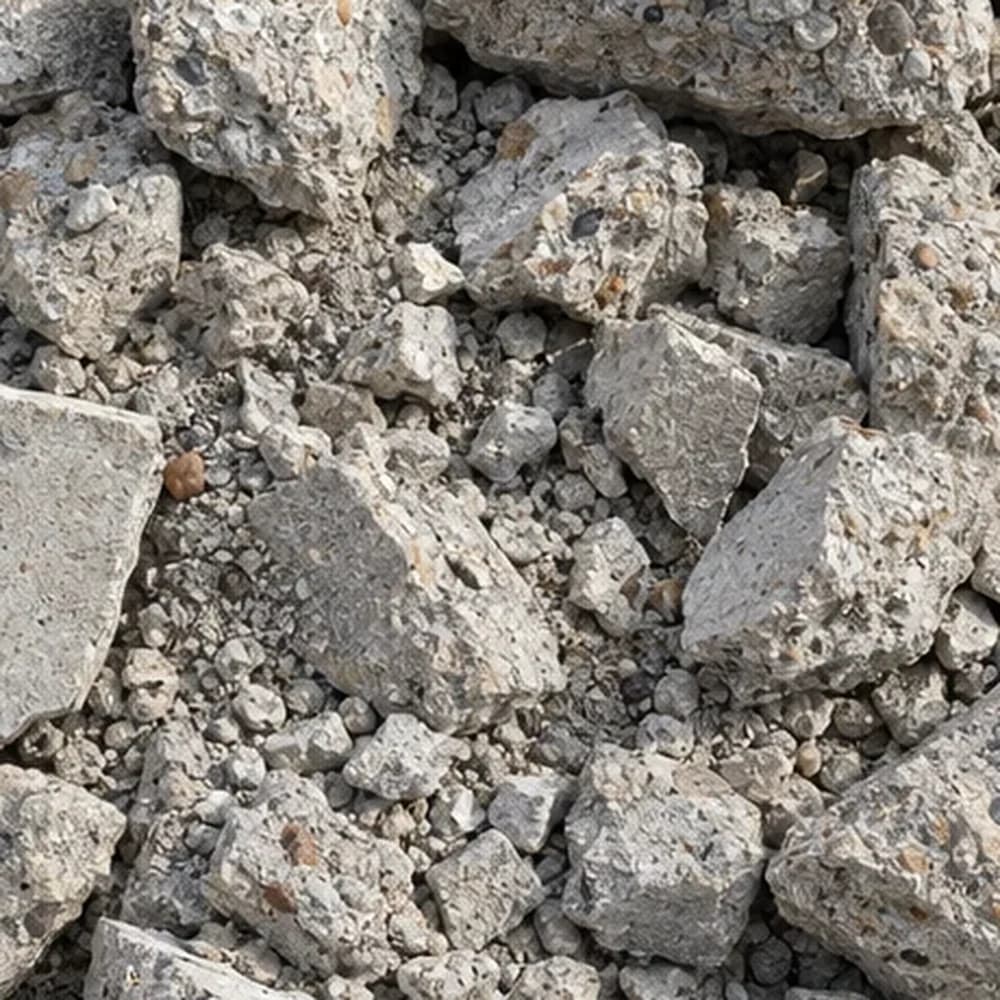
Recycled crushed concrete base runs through the same arithmetic at 1.50 tons a yard where the specification allows it, so check the county's wording before substituting rather than after. Once the tonnage is settled, open the product page, set the quantity and pick a delivery date. Delivery is arranged at checkout by ZIP code, and the truck needs firm footing and room to tip, which on a spring lane usually means unloading at the road end rather than halfway down. Indiana Rock Supply can talk a depth through by message from the contact page if the subgrade is the part you are unsure about.
Common questions
Is the 8 inches the loose stone or the finished layer?
The finished layer, measured after rolling. Enter the compacted depth and leave the 10% box ticked, which covers spillage and the small loss as the lift tightens. Order on loose depth instead and you pay for stone that was never going to stay up there.
The turnaround by the shop is round. What goes in the diameter box?
Switch to circle mode and measure straight across the widest part. A 12 ft turnaround at 4 in works out at about 113 sq ft, 37.7 cubic feet, 1.40 cubic yards and 2.1 tons. Where the circle overlaps the lane you already measured, trim the lane length by that much so the overlap is not counted twice.
Can I check the tons on paper before I order?
Multiply square feet by the depth in inches, divide by 12 for cubic feet, divide by 27 for cubic yards, then multiply by 1.5. The quick sense check is coverage: one cubic yard spreads over 54 sq ft at 6 in, and one ton over about 36.
Why does a #53 order come out heavier than the same job in clean stone?
The cubic yards do not move, because the hole is the same hole. Only the weight changes, and this site publishes #53 at 3,000 lb a yard against about 2,800 for clean #57, so a lane ordered in base stone lands heavier on the truck than the same lane in drainage rock.
Is 10% enough for a lane a grain truck will use in the same week?
For an ordinary lane, yes, provided the depth you entered was the compacted one and the lifts get rolled. Where a drawing gives an engineered compaction figure, work from the compacted depth on the drawing and plan an extra lift rather than leaning on the checkbox.
Related calculators
Thirty tons. Zero delivery fees.
Road base priced per ton, hauled free, at lane quantities where hauling usually costs the most.