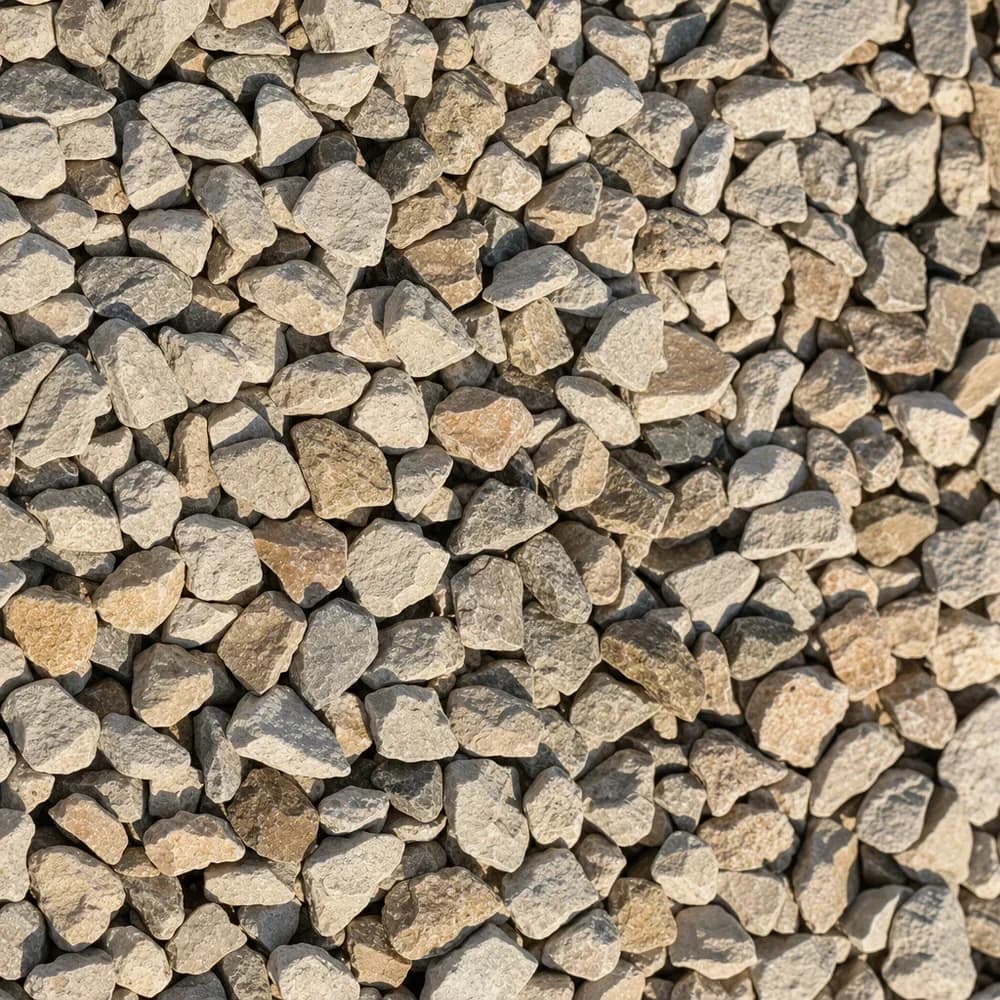
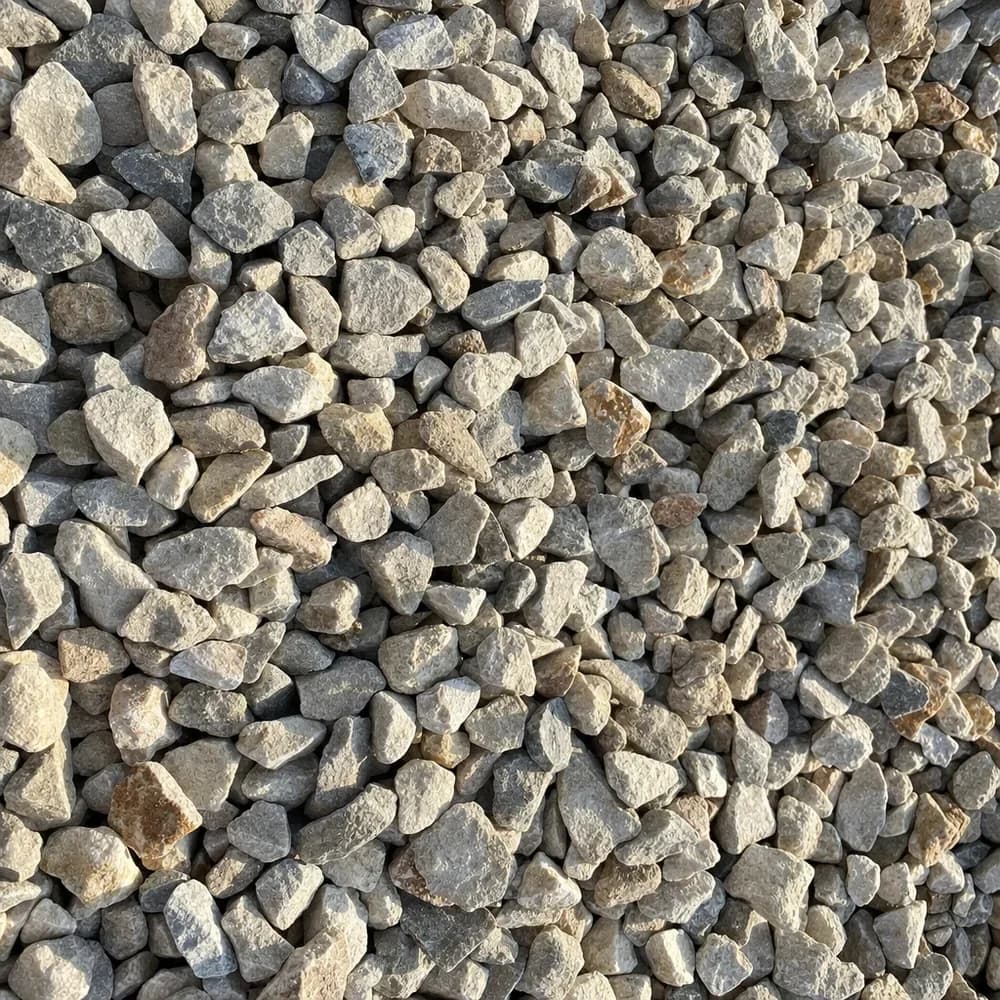
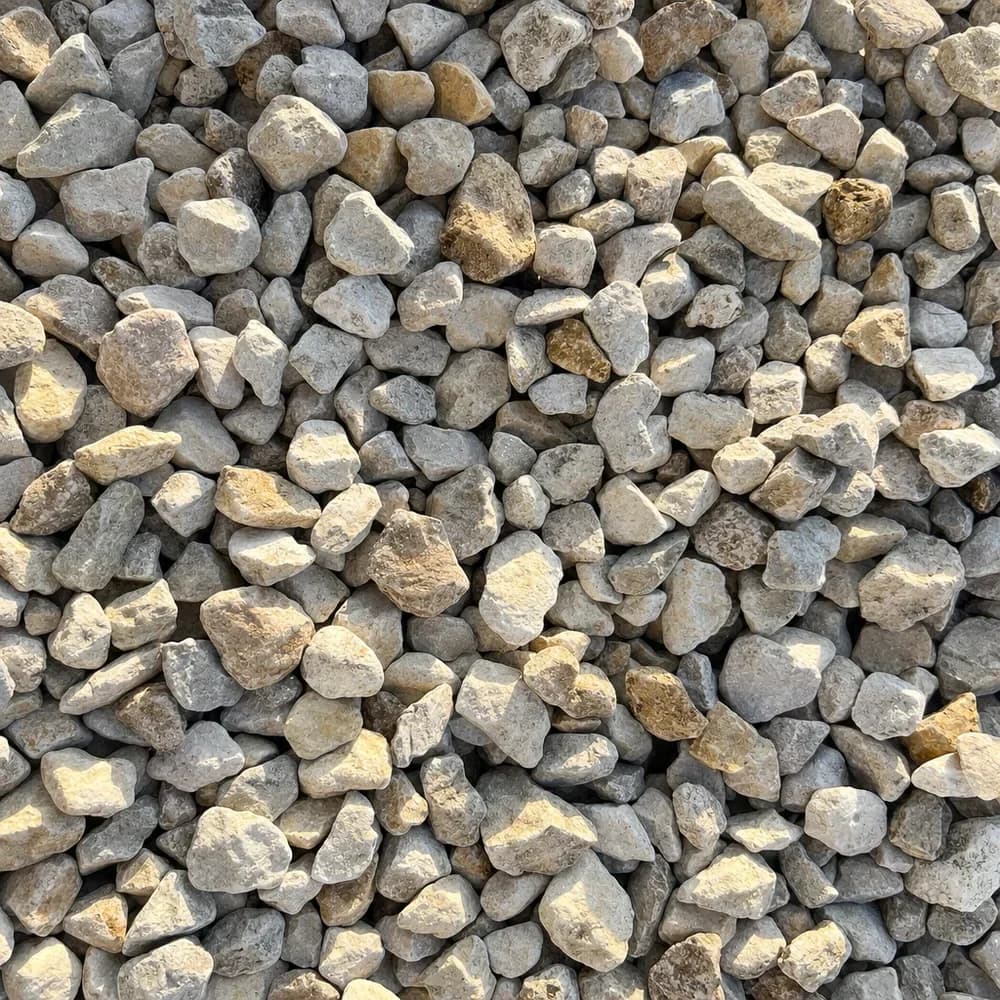
#67 Stone for Drain Runs and Bedding in Northwest Indiana
For Indiana drainage tile beds, #67 Stone gives water a route through angular crushed material and leaves paths or planted areas evenly finished.
- Size: 1/4 inch to 3/4 inch
- Grading: #67
- Type: Angular crushed stone
From $462 for 1 ton, delivery included (larger loads cost significantly less per ton)
Free delivery included
Free delivery anywhere in Indiana
Pick a delivery date
Weekday delivery, earliest Oct 30
“Ordered stone from Indiana Rock Supply and the whole thing was super easy. Delivery showed up when expected, and the stone was exactly what I needed. I'd definitely use them again.”
Ryan A. · Verified Buyer
Get a Free Quote
Fill out the form and our sales team will get back to you within the hour.
Size and Grading
- Size
- 1/4 inch to 3/4 inch
- Grading
- #67
- Type
- Angular crushed stone
Two piles tipped on the same sandy lot in the Kankakee basin can look interchangeable from the cab of a truck, and one of them is #67 stone. It runs from a quarter inch up to three quarters, where the size most people reach for first starts at three quarters and goes up to an inch. That gap of half an inch sounds like nothing. In a narrow trench beside a foundation, around a pipe, or spread as a finished surface somebody walks on, it changes how the material behaves in three separate ways.
| Spec | Figure |
|---|---|
| Size | 1/4 inch to 3/4 inch |
| Grading | #67 |
| Type | Angular crushed stone |
#67 stone against the next size up, and when the smaller pieces win
Both are washed, open graded and angular. Both leave voids for water to move through, and neither will ever set up into a surface. What changes with the smaller top size is packing, surface feel and how easily the material finds its way into tight spaces.
| Consideration | #67 stone | #57 stone |
|---|---|---|
| Size range | 1/4 to 3/4 inch | 3/16 to 1 inch |
| In a narrow trench or around a pipe | Flows in and fills around the haunches | Bridges more easily in tight gaps |
| Underfoot as a finished surface | Firmer, smaller pieces, less roll | Coarser and looser to walk on |
| Void space for high flow | Smaller passages, still free draining | More open, better for heavy volume |
| In a concrete mix | Finer texture on an exposed face | Coarser exposed texture |
The rule of thumb that survives contact with a real job: the tighter the space and the more the surface will be seen or walked on, the more the smaller size earns its keep. Where a drain has to carry serious volume off a slope, go the other way, to the larger sizes or to drain rock.
High water table, muck pockets and clay ridges within the same half mile
The northwest is not one kind of ground, and a drainage plan drawn for one part of a parcel can be wrong a hundred yards away. Dune and beach ridge sand sits near the lake, wide sandy outwash plains and drained former marsh fill the Kankakee basin with pockets of muck in the low spots, and clay loam till makes up the moraine ridges and till plains between them.
That produces two opposite problems, often on the same property.
On the sand and the old lake plain, water soaks away readily but the water table is high, so low ground stays wet after rain and snowmelt whatever you bury in it. An open stone bed there is not creating drainage; it is creating a reservoir with good access unless the outlet sits above the water table. Find out where the water actually stands before deciding on trench depth.
On the clay till ridges, water sheds slowly and perches. There an open bed genuinely does move water, provided somebody gives it a route out to a ditch, a tile connection or a daylight point.
Winters here are long, with repeated freeze-thaw that heaves drives on wet ground and softens subgrades when the thaw comes. Lake County requires deck footings at least 36 inches down, and the local building department sets the figure for any given parcel. Footing depth and drain depth are separate questions, but both are decided by the same ground.
Placing it without burying a fault you cannot reach later
Set the outlet first and work back up the run. Every part of an open stone bed is downhill of something, and the only part that matters on day one is the lowest.
Around a pipe, shovel the stone in beside the barrel and work it under the haunches rather than tipping it over the top. A pipe bedded only on its sides ends up carrying load on two lines instead of across the bottom, and the smaller pieces of this grade make that easier to get right by hand than a coarser stone does.
Wrap the trench in filter fabric where the surrounding ground is fine. On the silty and mucky low ground of the basin that is not a refinement, it is what decides whether the bed is still working in five years.
As a visible surface, spread it over a prepared, compacted layer rather than straight onto soft ground, and give it an edge. Three inches is usually enough for ground cover and tree rings, since this is a finish and not a structural course.
What silt does to an open bed over five northern winters
An open bed does not wear out. It fills in. Fine material washes down into the voids from above and works in from the sides, the passages close, and one wet March the water is back where it started with nothing visibly wrong on the surface.
Three habits keep that at bay. Keep bare soil, mulch and lawn clippings off an exposed bed, because everything that lands on it eventually goes into it. Check the outlet each fall before the ground freezes, since a blocked outlet turns the whole run into standing water. And on a visible surface, rake the stone back inside its edge once a year; the pieces migrate to the outside of every corner and every traffic line, and a thin patch is a weed bed by June.
Tons for a drive repair, a walkway bed and a garden drain
Hypothetical jobs, worked through. Length times width times depth, all in feet, divided by 27, gives cubic yards. The site publishes about 2,800 lb per cubic yard for stone in this family, roughly 1.40 tons per cubic yard, so the tonnages below are approximate.
The failed 30 feet of a single-car gravel drive, 30 feet by 10 feet, rebuilt with 5 inches of open stone under the surfacing. 30 x 10 = 300 square feet. Five inches is 0.417 feet, so 300 x 0.417 = 125 cubic feet. 125 divided by 27 = 4.6 cubic yards, about 6.5 tons.
A drainage layer under a flagstone walk on wet lake-plain ground, 44 feet by 4 feet at 4 inches. 44 x 4 = 176 square feet. Four inches is 0.333 feet, so 176 x 0.333 = 58.7 cubic feet. 58.7 divided by 27 = 2.2 cubic yards, roughly 3.0 tons.
A shallow drain along the uphill side of a row of raised vegetable beds, 36 feet long, trench 12 inches wide, stone 8 inches deep. 36 x 1 = 36 square feet of trench floor. Eight inches is 0.667 feet, so 36 x 0.667 = 24 cubic feet. 24 divided by 27 = 0.9 cubic yards, about 1.2 tons.
Enter your own measurements in the stone calculator, which takes feet for length and width, inches for depth, a circle or up to five areas, and a 5 percent margin it adds by default, which you can untick. To order, choose a delivery date and a quantity on this page; delivery is arranged from your ZIP code at checkout. Measurements you want checked before booking can go through the contact page.
Quickly Calculate How Much You Need
Material: #67 Stone
How to Measure
Measure the length and width of your project area in feet
Decide on depth in inches (2" for landscaping, 4" for driveways)
Enter the values above and we'll calculate the tonnage you need
Need help figuring out the right amount? We can help!
Call or text us at (812) 721-8126 and we'll help you calculate the right quantity for your project.
Not sure how much you need? The Stone Calculator has depth guides, coverage charts and worked examples for this material.
Frequently Asked Questions About #67 Stone
Customer Reviews
Ordered stone from Indiana Rock Supply and the whole thing was super easy. Delivery showed up when expected, and the stone was exactly what I needed. I'd definitely use them again.
Ryan A. · Indianapolis, IN · Verified Buyer
Project Turned Out Great
I would gladly use Indiana Rock Supply for another project. I got the result I wanted with the #67 stone. I appreciated the clear communication and friendly service.
Karen E. · Fishers, IN · Verified Buyer
Grabbed stone from the team for a yard project and it showed up right when I needed it. The stone was solid material and made the whole job a lot easier. I'd definitely order from the team again.
Tom I. · Bloomington, IN · Verified Buyer
Needed stone for a weekend yard project and ordered from them. Free delivery was a huge plus, and everything showed up right where I needed it.
Diane P. · Bloomington, IN · Verified Buyer
Reliable driveway refresh
This was a good size for refreshing a compacted driveway. It spread evenly and held its place after regular trips in and out. The result at my place in Carmel, IN looks finished and has held up well.
Emerson J. · Fort Wayne, IN · Verified Buyer
#67 Stone has 5 verified customer reviews with an average rating of 5 out of 5.